HAVE ANY QUESTIONS?
  15 YEARS OF EXPERIENCE

A loud garage door opener can ruin a quiet morning fast. You press the remote, and the door rattles, squeaks, grinds, or shakes hard enough to wake the house. If your garage sits under a bedroom or near the living room, that noise can feel even worse. The good news is that many noisy opener problems have simple causes. With the right quiet garage opener tips, you can reduce garage door noise, protect your opener, and enjoy smoother daily operation without guessing what to fix first.
A noisy garage door opener is often caused by dry moving parts, loose hardware, worn rollers, vibration, poor door balance, or an aging opener. Start with safe visual checks, basic lubrication, and simple tightening. If the noise continues, a certified technician can inspect the full garage door system and find the real cause.
Quiet Garage Opener Tips: Start With the Type of Noise
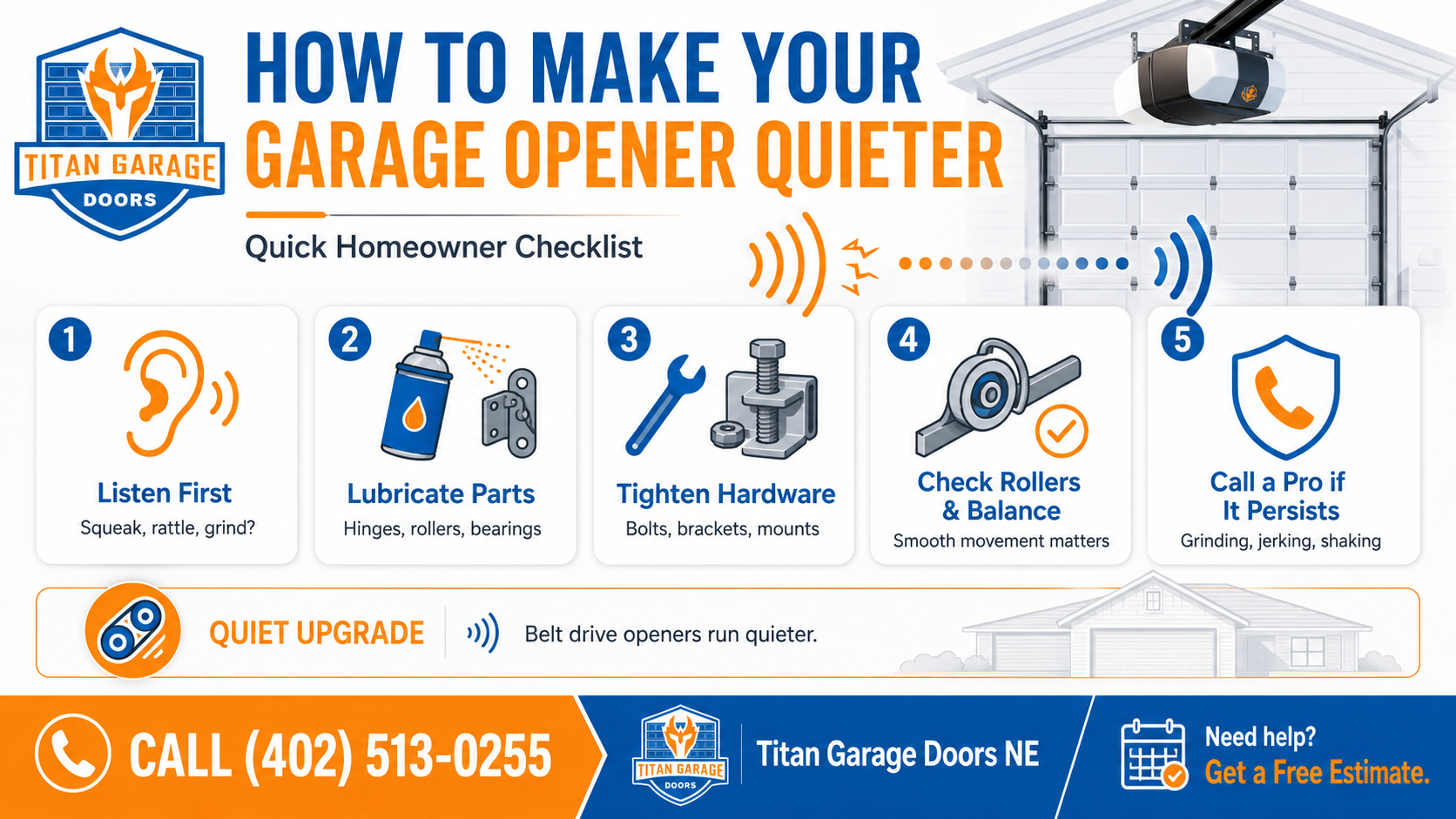
Before you fix anything, listen to the sound. Different noises can point to different problems. This helps you avoid wasting time on the wrong repair.
A squeaking sound often means the door needs lubrication. Meanwhile, a rattling sound may come from loose bolts, brackets, or opener hardware. On the other hand, a grinding sound can point to worn gears, a strained motor, or damaged moving parts. Lastly, a loud shake may mean the opener is vibrating against the ceiling or the garage door is not balanced well.
If the noise started all of a sudden, take it seriously. A new sound can mean something has changed in the system. Do not ignore it, especially if the door also moves more slowly than normal or jerks while opening.
Common Garage Door Noises and What They Mean
Use this quick guide to identify the noise and the most likely cause before deciding on the next step.
| Problem | Possible Cause | Best Solution | Cost Level | Timeline |
|---|---|---|---|---|
| Squeaking sound | Dry hinges, rollers, or bearings | Lubricate moving parts | Low | 15–30 minutes |
| Rattling sound | Loose bolts or brackets | Tighten visible hardware | Low | 15–30 minutes |
| Grinding noise | Worn opener gears or motor strain | Schedule a professional inspection | Medium | Same-day check possible |
| Loud vibration | Opener mount or ceiling transfer | Add vibration pads or inspect the setup | Low to medium | Varies |
| Rough door movement | Old rollers or dirty parts | Clean, lubricate, or replace rollers | Medium | Varies |
| Door shakes or jerks | Track, balance, or spring issue | Call a certified technician | Medium to higher | Same-day check possible |
| Opener is always loud | Older chain drive opener | Consider belt drive opener upgrade | Higher | Depends on product availability |
Quiet Opener Tips for Lubrication and Smooth Movement
One of the easiest quiet garage opener tips is regular lubrication. Dry metal parts create friction. Friction creates noise. It can also make the opener work harder than it should.
Focus on the moving garage door parts, not just the opener motor. Apply garage door lubricant to hinges, rollers, springs, and bearings. Use a silicone-based spray or white lithium grease made for garage doors. Avoid heavy grease on the tracks because it can collect dirt and make movement worse.
A simple maintenance routine can help:
- Close the garage door.
- Turn off the power to the opener before working near moving parts.
- Wipe dust and dirt from hinges and rollers.
- Apply a small amount of lubricant to moving parts.
- Open and close the door to spread the lubricant.
- Listen for changes in sound.
Do this every six months, or sooner if the door starts to squeak again.
Garage Opener Tips for Loose Hardware and Vibration
Garage doors move every day. Over time, that movement can loosen screws, bolts, brackets, and opener mounts. Loose parts can create rattling, shaking, and banging sounds.
Check the visible hardware around the garage door and opener. Look at the hinges, track brackets, opener rail, and support brackets. Tighten anything that looks loose, but do not adjust springs or cables. Those parts are under high tension and can be dangerous.
Vibration is another common issue. If the opener shakes when it runs, the sound can travel through the ceiling and into nearby rooms. This is common in attached garages. Vibration pads or isolators may help reduce the noise transfer. However, if the opener shakes a lot, there may be a balance or installation issue that needs professional attention.
Quiet Opener Tips for Rollers, Tracks, and Door Balance
Sometimes, the opener is not the real problem. The garage door itself may be making the opener sound loud.
Old metal rollers can create a rough, noisy ride. Nylon rollers are often quieter and smoother. Bent tracks can also cause the door to drag or shake. If the door is out of balance, the opener has to pull harder, which can make the motor louder and wear it out faster.
You can do a basic visual check. Watch the door as it moves. Does it shake? Does one side move faster than the other? Or, does it look like it is dragging? These signs can point to track, roller, spring, or balance problems.
However, do not try to adjust the spring system yourself. If the door feels heavy, uneven, or unsafe, contact a reliable garage door expert in Omaha immediately.
When a Garage Door Opener Upgrade Makes Sense
If your opener is old, maintenance may only help so much. Some older chain drive openers are naturally louder than newer models. A chain drive opener can still work well, but it may not be the best choice if quiet operation is your top goal.
A belt drive opener is usually quieter. It is a good option for Omaha homes with attached garages, bedrooms above the garage, or frequent early morning use. Some newer openers also offer soft start and stop features. These help the door move more smoothly instead of jerking at the beginning or end of travel.
An upgrade may make sense if:
- Your opener is more than 10 years old
- The motor sounds strained
- The opener shakes often
- Repairs are becoming frequent
- You want a quieter daily operation
- You want smart garage door opener features
A quieter garage door opener can improve comfort, but it should be paired with a healthy door system. Even the best opener will sound loud if the rollers, springs, or tracks are worn.
When Garage Door Opener Noise Needs Professional Repair
Some noises are warning signs. If you hear grinding, popping, scraping, or loud banging, stop using the door if it feels unsafe. These sounds may point to worn gears, broken parts, door imbalance, or opener strain.
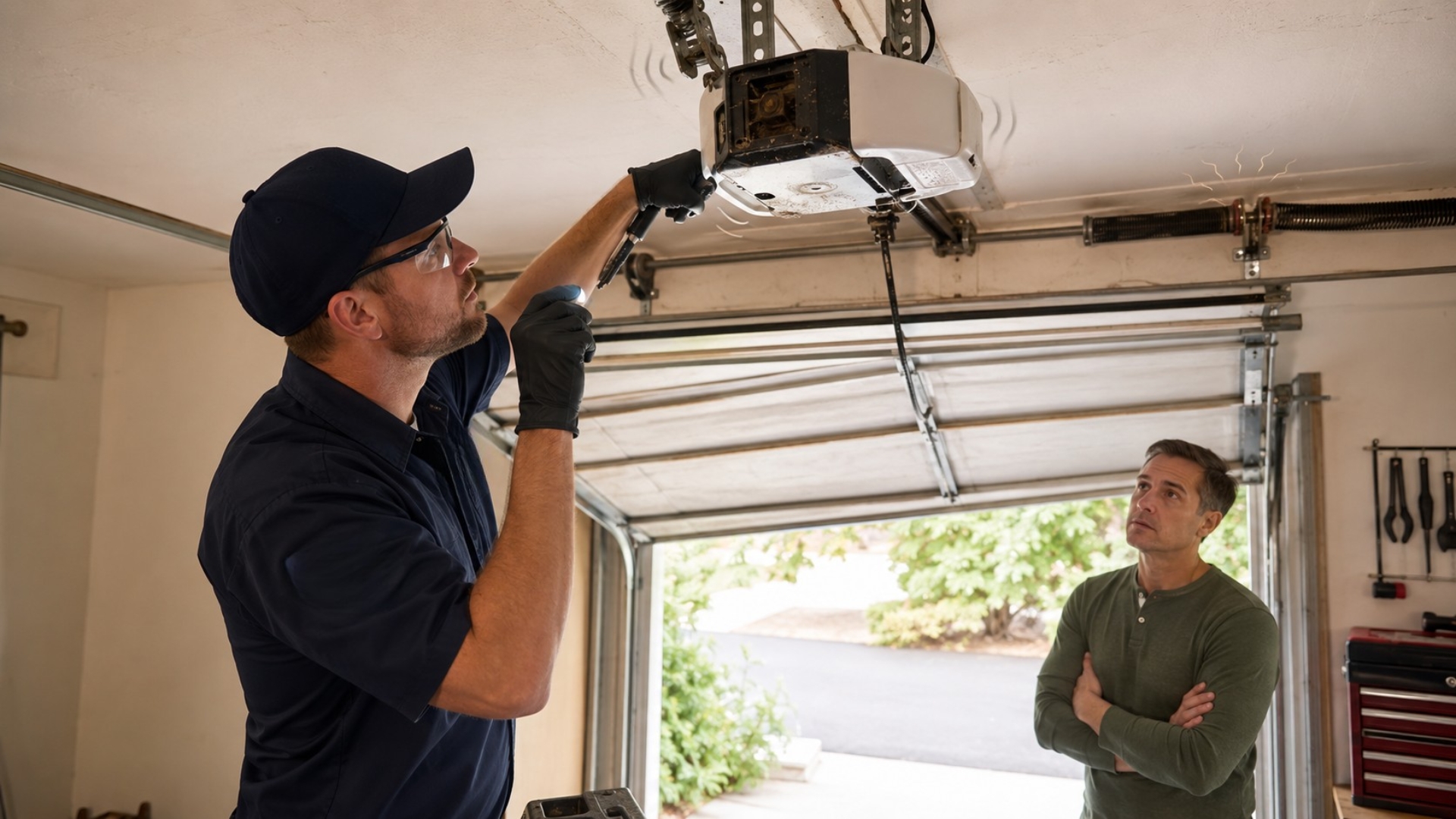
Professional garage door opener service is also smart if the door opens partway and stops, reverses for no clear reason, moves unevenly, or feels heavier than normal. A certified technician can inspect the opener, springs, cables, rollers, tracks, and safety sensors.
This matters because the opener is only one part of the system. If another part is failing, the opener may be taking extra strain every time you use it.
FAQs About Quiet Garage Door Openers
Why did my garage door opener suddenly get louder?
A sudden change in sound may come from loose hardware, dry parts, worn rollers, opener strain, or a balance issue. If the noise is grinding, banging, or scraping, stop using the door and schedule an inspection.
Are belt drive garage door openers really quieter?
Yes. Belt drive openers are usually quieter than chain drive openers. They are a strong choice for attached garages, especially when bedrooms or living spaces are close to the garage.
Can cold Omaha weather make a garage door opener louder?
Yes. Cold weather in Omaha can make metal parts contract and stiffen. Old lubricant can also thicken. This may cause more noise during winter, especially if the door has not been maintained.
Should I replace my opener or repair it?
Repair may be enough if the opener is newer and the issue is minor. Replacement may make more sense if the opener is old, loud, unreliable, or missing the features you want.
Can a quiet opener still lift a heavy garage door?
Yes, but the door must be balanced and properly installed. The opener should guide the door, not fight against its weight. If the door is too heavy or unbalanced, the opener can become noisy and wear out faster.
Conclusion
The best quiet garage opener tips start with simple checks. Listen to the noise, lubricate moving parts, tighten visible hardware, and watch how the door moves. If the sound continues, the problem may be deeper than the opener itself.
A quiet garage door system depends on healthy rollers, balanced springs, clean tracks, secure hardware, and the right opener type. When each part works well, the opener does not have to strain. That means less noise, smoother movement, and better daily comfort.
Get a Free Estimate for Garage Door Opener Service in Omaha
If your garage door opener is loud, shaky, or getting worse, Titan Garage Doors NE can help. Our certified technicians inspect the full garage door system, explain the cause of the noise, and recommend the right repair or opener upgrade for your home.
We use premium-quality garage door parts and openers built for dependable daily use. We also offer monthly payment plans, making it easier to move forward with the service your home needs.
Call Titan Garage Doors NE at (402) 513-0255 today for a Free Estimate and get expert help making your garage door opener quieter, smoother, and more reliable.