HAVE ANY QUESTIONS?
  15 YEARS OF EXPERIENCE

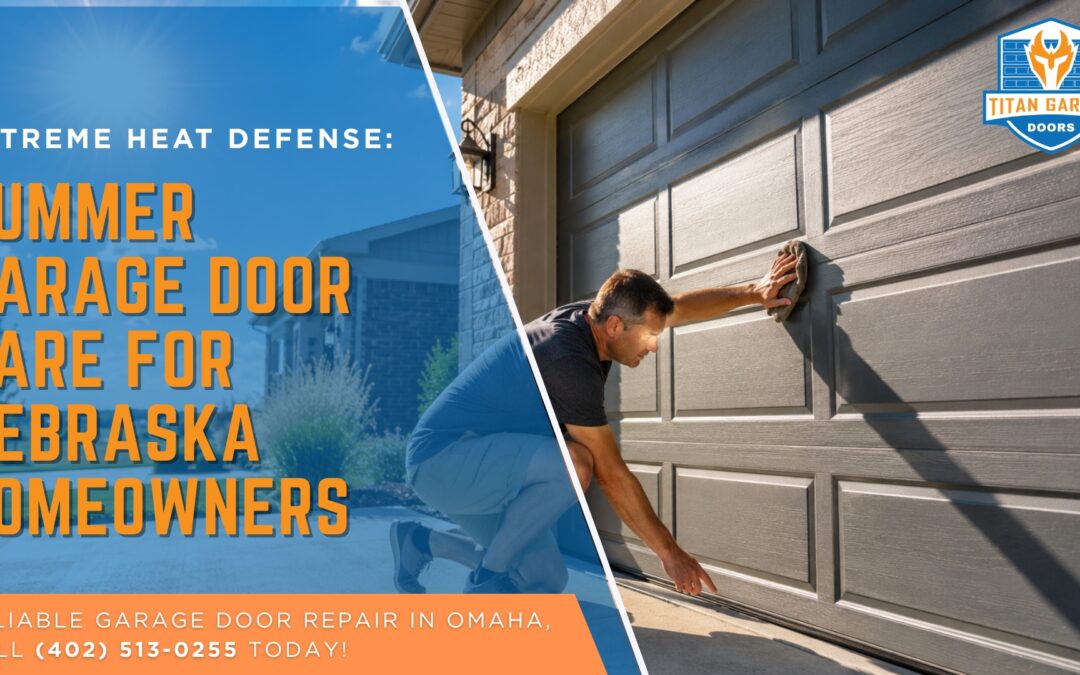
Nebraska summers can be hard on a garage door. During long July heat waves, the garage can become one of the hottest spaces in the home. That heat can wear down lubricants, dry out weather seals, fade finishes, and make older parts work harder. A door that seemed fine in spring may suddenly sound louder, shake more, or struggle to move smoothly. That is why summer garage door care matters. A few simple checks can help you spot small problems before they turn into a stuck door, a strained opener, or an unexpected repair during a busy summer week.
Summer heat can affect garage door panels, rollers, tracks, weather stripping, and opener performance. Thus, regular cleaning, safe lubrication, and seasonal inspections can help reduce wear and keep the system working smoothly.
Why Summer Garage Door Care Matters in Nebraska
Your garage door moves through changing temperatures all year. However, summer in Nebraska brings a different kind of stress. Strong sunlight can fade paint and finishes. Older weather stripping can crack or flatten. Dust and debris can build up around the tracks. At the same time, hot, dry conditions may leave rollers and hinges with less effective lubrication.
These issues can affect both comfort and function. When the door does not move smoothly, the opener has to work harder. This extra strain can lead to louder operation, slower movement, or premature wear on the motor and drive system.
For attached garages, worn seals can also allow more heat into the space. That can make rooms near or above the garage feel less comfortable.
How Summer Heat Affects Garage Door Parts
Summer heat does not always cause immediate damage. Still, it can make existing wear more noticeable. The parts below deserve extra attention during the hottest months.
Garage Door Panels, Paint, and Exterior Finish
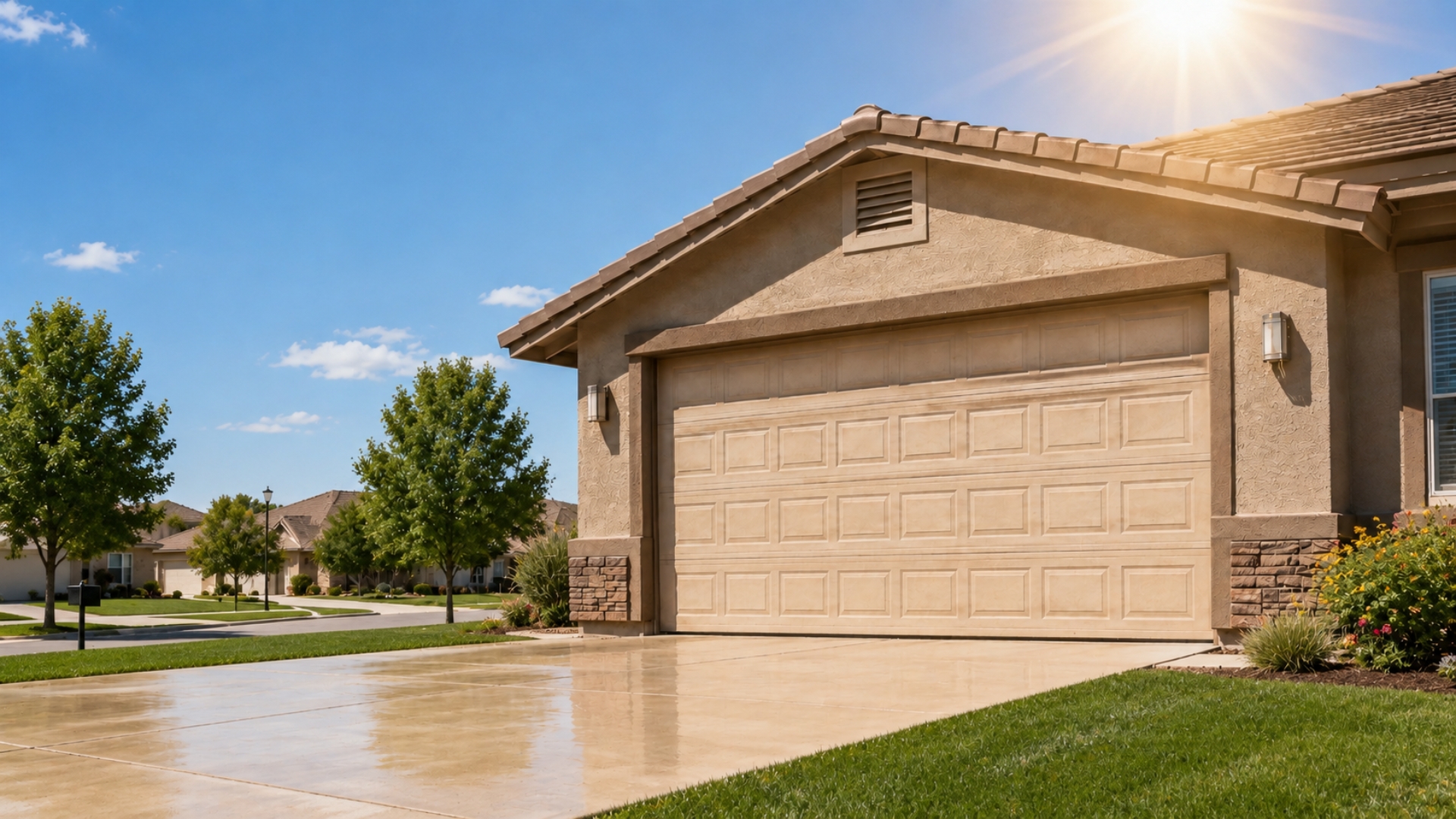
Direct sun can make garage door panels look faded, dull, or chalky over time. Darker colors and doors that face strong afternoon sun may show wear sooner. If the protective finish is already damaged, steel doors can also develop rust spots around scratches, seams, and lower edges.
Clean the door with mild soap and water every few months. This removes dust, pollen, and road grime that can wear down the finish. Then look for peeling paint, dents, rust, or damaged spots near the bottom of the door.
Garage Door Rollers, Hinges, and Tracks
Tracks, rollers, and hinges help the door move in a controlled path. If they become dry, dirty, or worn, the door may squeak, rub, or shake.
Use a garage door lubricant on rollers, hinges, springs, and bearings. Silicone-based spray or white lithium grease works better than heavy household grease. Do not coat the tracks with lubricant. Tracks should stay clean so rollers can move smoothly.
Also look for loose brackets, worn rollers, and visible dirt inside the track path. These small issues can make a big difference in how the door moves.
Weather Stripping and Garage Comfort
Weather stripping helps block hot air, dust, pests, and moisture. During summer, a worn bottom seal can leave a noticeable gap under the garage door. Side and top seals can also pull away or crack over time.
Close the door and look for visible daylight around the edges. Check that the bottom seal sits evenly against the floor. If the seal feels brittle, torn, or flattened, replacement may be a smart upgrade.
Good weather stripping does not make the garage cold, but it can reduce outside heat and help protect the lower edge of the door.
Garage Opener and Electrical Components
A garage door opener may work harder when the door has too much resistance. This can happen when rollers are worn, tracks are dirty, or the door is not balanced. In a hot garage, an already strained opener may become louder or slower.
Watch for humming, shaking, jerking, or repeated reversing. These are not normal signs of summer heat. They may point to a door balance issue, worn hardware, or opener strain that needs professional attention.
Summer Garage Door Care Checklist for Homeowners
The best summer garage door care starts with a simple monthly inspection. You do not need to take apart the system. Focus on what you can safely see, hear, and test.
Use this checklist:
- Watch the door open and close from a safe distance.
- Listen for squeaking, grinding, rattling, or scraping.
- Check the door panels for fading, dents, peeling paint, or rust.
- Clear leaves, dirt, and debris away from the track area.
- Wipe dust from the safety sensors near the bottom of the door.
- Apply garage door lubricant to rollers, hinges, and springs.
- Inspect weather stripping for gaps, cracks, or loose sections.
- Check visible bolts and brackets for looseness.
- Test the auto-reverse function using a small object under the door.
Avoid touching torsion springs, cables, bottom brackets, or major track adjustments. These parts are under high tension and can be dangerous. Always call a certified technician in Omaha.

When DIY Garage Door Maintenance Is Enough and When to Call a Pro
Basic upkeep can help prevent many minor problems. Cleaning the exterior, clearing debris, checking weather seals, and lubricating moving parts are all useful homeowner tasks.
However, some signs point to a problem that needs garage door maintenance from a trained technician. Call for service if you notice:
- The door is crooked or off track
- The opener shakes hard or sounds strained
- The door reverses without a clear reason
- One side of the door moves differently than the other
- A spring looks broken or stretched
- Cables appear loose or damaged
- The door feels heavy when operated manually
- The same noise keeps returning after lubrication
Early summer is a smart time to book service. It gives a technician time to catch worn parts before the hottest weeks put more stress on the door and opener.
A professional seasonal garage door inspection can include door balance, roller condition, track alignment, visible hardware, spring system checks, opener performance, safety sensors, and weather stripping.
Choosing Garage Door Materials That Handle Summer Wear
If you are replacing an older garage door, material choice can affect long-term summer performance. The table below outlines common materials, how they handle summer conditions, and what to consider before choosing one.
| Material | Key Benefits | Summer Performance | Considerations |
|---|---|---|---|
| Insulated Steel | Durable, low-maintenance, widely available | Helps reduce heat transfer, holds up well in direct sun | Can dent if impacted, may need occasional repainting |
| Fiberglass | Moisture-resistant, lightweight | Performs well in humid conditions, resists warping | Can fade over time with strong sun exposure |
| Vinyl | Low-maintenance, resistant to dents and rust | Handles heat and humidity well, does not corrode | Fewer style and color options compared to other materials |
| Wood | Classic appearance, customizable | Can be affected by heat, sun, and moisture over time | Requires regular sealing, staining, or painting |
| Composite | Wood-like appearance with added durability | More resistant to weather changes than natural wood | Typically higher upfront cost than basic materials |
Each material offers different advantages depending on your home’s exposure to sun, your maintenance preferences, and your budget.
FAQs About Summer Garage Door Care
Can July heat make my garage door opener stop working?
July heat in Nebraska can add strain to an opener, especially when the garage door has dry parts, worn rollers, or poor balance. If the opener becomes louder, slower, or inconsistent, it should be inspected.
How can I tell if my garage door weather stripping needs replacement?
Look for cracks, flat spots, tears, loose sections, or visible daylight around the closed door. A seal that no longer touches the floor evenly may need replacement.
Is it okay to wash my garage door with a pressure washer?
Use caution when washing your garage door with a pressure washer. Strong pressure can damage paint, seals, and older panel finishes. Mild soap, water, and a soft brush are usually safer for regular cleaning.
Does a garage door need more maintenance in summer than winter?
Summer does not always require more maintenance, but heat and dust can make existing issues more noticeable. A seasonal check helps catch wear before it affects daily use.
Can I use any lubricant on my garage door?
No, you can not just use any lubricant on your garage door. Use a lubricant made for garage door moving parts, such as silicone-based spray or white lithium grease. Avoid using heavy grease on tracks.
Conclusion: Keep Your Garage Door Ready for Nebraska Heat
Summer heat can make small garage door issues easier to notice. Dry rollers, loose hardware, worn seals, fading panels, and opener strain may all become more frustrating during July.
With regular summer garage door care, you can help protect the door, opener, and moving parts before a small issue becomes a larger repair. A quick monthly garage door maintenance can improve smooth operation and help your garage door stay reliable through the hottest part of the season.
Book Summer Garage Door Maintenance in Nebraska
Titan Garage Doors NE can help keep your garage door ready for summer. Our certified technicians inspect the full system, identify early wear, and recommend practical repairs or upgrades based on your door’s condition.
We use premium-quality garage door parts and offer monthly payment plans to make needed maintenance, repairs, or replacements easier to manage.
Call Titan Garage Doors NE at(402) 513-0255 today for a free estimate and schedule seasonal garage door maintenance before a small issue becomes a summer breakdown.