HAVE ANY QUESTIONS?
 15 YEARS OF EXPERIENCE

Is your garage door making noise every time you leave the house? Maybe it squeaks halfway up, rattles as it closes, or makes a grinding sound that wasn’t there last month. It’s easy to ignore these sounds when the door still works. After all, garage doors aren’t exactly quiet. But when a familiar sound changes or gets louder, something in the system may need attention.
The good news? Not every noisy garage door needs an expensive repair. Sometimes, a professional tune-up can address worn parts, loose hardware, or friction before they cause bigger problems.
So, how do you know when it’s time to schedule one? Let’s look at what different noises mean and which warning signs deserve a closer inspection.
Why Is Your Garage Door Making Noise?
Your garage door has several moving parts that work together every time you press the opener. Rollers travel along metal tracks, hinges connect the panels, and springs help lift the door’s weight. Over time, these parts experience normal wear. Hardware can loosen, rollers can deteriorate, and moving joints may need lubrication. As a result, a door that once operated quietly may start making unfamiliar sounds.
However, not every garage door noise comes from the same problem. A squeak may point to friction, while a loud bang could signal a broken spring.
Understanding the difference helps you decide whether your door needs routine garage door maintenance or immediate professional repair.
5 Common Garage Door Noises and What They Mean
Before you assume the opener needs replacing, pay attention to when the noise happens and what it sounds like. Here are five common sounds homeowners notice and what may cause them:
1. Garage Door Squeaking During Opening or Closing
Does your garage door make a high-pitched squeak as it moves? Squeaking often comes from friction around hinges, roller bearings, or other moving components. These parts need proper lubrication and regular inspection to operate smoothly.
However, lubrication won’t fix a worn bearing or damaged roller. If the squeaking continues or becomes louder, schedule a garage door tune-up so a technician can identify the source.
2. Garage Door Rattling or Shaking
A rattling garage door may have loose hinges, brackets, or other hardware. Every time the door moves, vibration can cause these components to make noise.
You might hear a light rattle near the top panel or a louder vibration as the door reaches the ceiling. Sometimes, worn garage door rollers also contribute to shaking.
A technician can inspect the hardware, check the rollers, and determine whether adjustments or replacement parts are necessary.
3. Grinding or Scraping Sounds
Grinding deserves more attention than an occasional squeak. It may indicate worn roller bearings, damaged hardware, or components rubbing against surfaces they shouldn’t touch. If you hear metal scraping along the track, the door may also have an alignment problem.
However, don’t keep operating a garage door that grinds, scrapes heavily, or moves unevenly. Continuing to use it can worsen the damage. Instead, arrange a professional inspection before the door becomes stuck.
4. Loud Popping or Banging Noises
Did you hear a sudden bang from your garage? A loud popping sound can sometimes come from a shifting panel or stressed hardware. However, a sharp bang followed by a garage door that won’t open may indicate a broken spring. This is different from ordinary operating noise.
If you suspect spring damage, stop using the opener and avoid touching the spring system. For more information, read our previous guide, How to Tell If Your Garage Door Spring Snapped. It explains the warning signs and why broken springs require professional repair.
5. Humming or Buzzing From the Garage Door Opener
Sometimes, the noise comes from the opener rather than the garage door itself. A humming motor that doesn’t move the door may indicate an opener problem, but a jammed door or broken spring can cause similar symptoms. Buzzing, clicking, or unusually loud motor sounds can also point to worn opener components.
If the opener sounds strained, don’t repeatedly press the remote. A technician should check the door’s movement and lifting system before determining whether the opener needs repair.
How Can You Tell If a Noisy Garage Door Needs a Tune-Up?
Some garage doors naturally make more noise than others. For example, older chain-drive openers often sound louder than newer belt-drive models. What matters most is whether the noise has changed.
Use this quick comparison to decide what to do next.
| What You Notice | What It May Mean | Recommended Action |
|---|---|---|
| Occasional light squeaking | Dry hinges or roller bearings | Schedule routine maintenance |
| Repeated rattling | Loose hardware or worn rollers | Arrange a tune-up |
| Increasing vibration | Roller wear or door balance problems | Schedule an inspection |
| Grinding or scraping | Damaged or misaligned components | Stop using the door and call |
| Sudden loud bang | Possible spring failure | Stop using the door and request repair |
| Door jerks or moves unevenly | Lifting system or track problem | Stop operation and call a technician |
If the door moves smoothly and securely but makes minor noises, routine maintenance may be enough.
However, if the noise comes with shaking, uneven movement, or difficulty opening, don’t wait for the next scheduled tune-up.
What Can Homeowners Safely Check Before Scheduling Garage Door Maintenance?
You don’t need to take your garage door apart to gather useful information. A few simple observations can help you explain the problem when you contact a technician.
- Listen for where the noise starts. Does it come from the opener near the ceiling, the rollers along the tracks, or the hinges between panels? If the door operates normally, you can observe it from a safe distance during regular use. Don’t run extra cycles to investigate a concerning sound.
- Look for visible damage. With the door closed, check for bent tracks, hanging cables, or visibly broken hardware. Stay clear of damaged components.
- Check for debris around the tracks. Dirt and small objects can collect around the track area. You can remove loose debris from accessible areas without reaching into the track or touching moving parts.
- Notice when the noise happens. Does it squeak only in the morning? Does the rattling start halfway up? These details can help a technician narrow down the cause.
Avoid adjusting springs, cables, brackets, or track alignment yourself. These components can carry significant force, even when the door isn’t moving.
What Does a Professional Garage Door Tune-Up Include?
A proper tune-up involves more than spraying lubricant on noisy parts. At Titan Garage Doors NE, our certified technicians assess the garage door’s overall condition to identify wear, movement problems, and possible safety concerns.
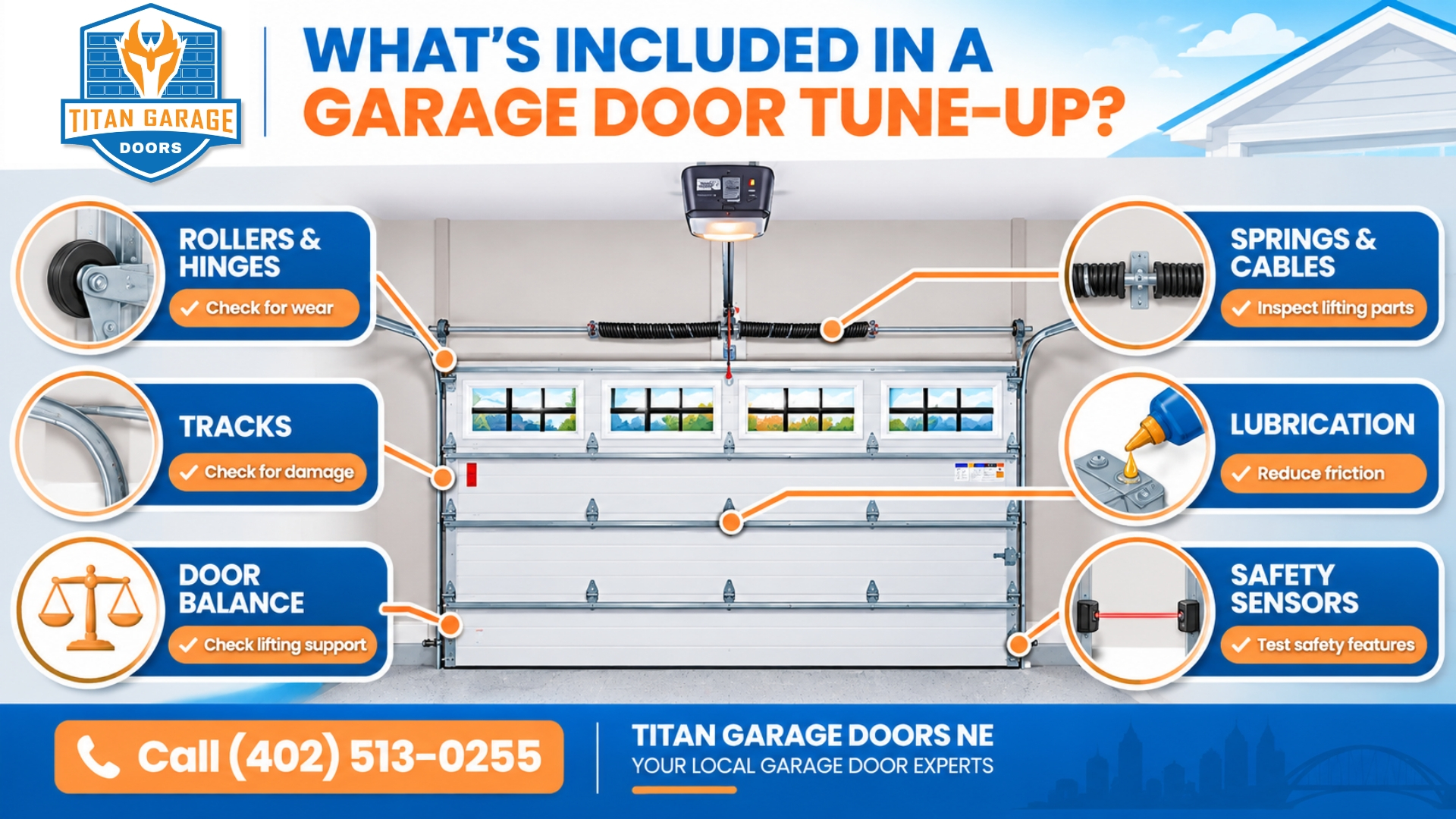
Depending on the door and its condition, a professional garage door maintenance visit may include:
- Inspecting rollers, hinges, brackets, and other moving hardware.
- Checking the springs, cables, and lifting system for visible wear.
- Examining tracks for damage or alignment concerns.
- Lubricating appropriate moving components with suitable products.
- Checking door balance and opener operation when safe.
- Testing the automatic reversal and photo-eye safety features.
If a technician finds a damaged component, they can explain whether it needs adjustment or replacement. Keep in mind that a tune-up cannot repair every problem. Broken springs, severely worn rollers, and damaged tracks may require separate repair work.
FAQs About Noisy Garage Doors
Homeowners often have a few questions before booking a tune-up. Here are some common concerns:
Is it normal for a garage door to make noise?
Yes. Garage doors naturally produce some sound during operation. However, new grinding, loud banging, or increasing rattling may indicate worn or damaged components.
Can I spray WD-40 on a squeaky garage door?
Standard WD-40 Multi-Use Product isn’t the best choice for long-term garage door lubrication. Use a lubricant specifically recommended for the appropriate garage door components, such as 3-IN-ONE® Garage Door Lube. Never grease the tracks, and avoid lubricating damaged parts instead of repairing them.
Will a garage door tune-up make my door quieter?
A tune-up may reduce noise caused by dry moving parts, loose hardware, or minor maintenance issues. However, worn rollers, damaged components, or a noisy opener may require additional work.
How do I know if my garage door rollers need replacing?
Watch for repeated rattling, rough movement, visible roller damage, or rollers that no longer move smoothly. A technician can confirm whether replacement is necessary.
Garage Door Making Noise in Omaha? Schedule a Tune-Up With Titan Garage Doors NE
That squeak or rattle might seem harmless today, but ignoring a changing sound can allow worn components to cause more trouble later. At Titan Garage Doors NE, we help Omaha homeowners identify noisy garage door problems and keep their doors operating safely. Our technicians inspect the moving parts, explain what they find, and recommend maintenance or repairs based on the door’s actual condition.
We also offer ongoing discounts and special offers, so ask about current savings when scheduling your appointment. For larger, unexpected repairs, flexible monthly payment plans may also be available, subject to financing terms and approval.
Don’t wait until your garage door stops working. Call Titan Garage Doors NE at (402) 513-0255 today to schedule a professional garage door tune-up in Omaha, NE.