HAVE ANY QUESTIONS?
  15 YEARS OF EXPERIENCE

Choosing a new garage door sounds simple until you start comparing the options. One of the biggest decisions is whether to buy insulated or non-insulated garage doors.
For some Omaha homeowners, non-insulated garage doors are completely practical. They cost less upfront and work well for garages used mainly for parking or basic storage. Other homeowners may get more value from an insulated garage door, especially when the garage connects to the house or gets used as a workspace.
So, which one is better? It depends on how you use your garage, where it sits in relation to your home, and what you expect from the new door. Here is a straightforward way to compare both options before your next garage door replacement.
Insulated vs. Non-Insulated Garage Doors: What’s the Difference?
The main difference is the construction of the door.
A non-insulated garage door usually has a simpler design without a dedicated layer of insulation. Because there is less material involved, these doors often cost less than insulated models.
On the other hand, an insulated door includes material such as polyurethane or polystyrene inside the door panels. That garage door insulation helps slow the movement of heat through the door.
However, insulation can affect more than temperature. Depending on the model, an insulated door may also feel more rigid and help reduce some outside noise.
Here is the basic comparison:
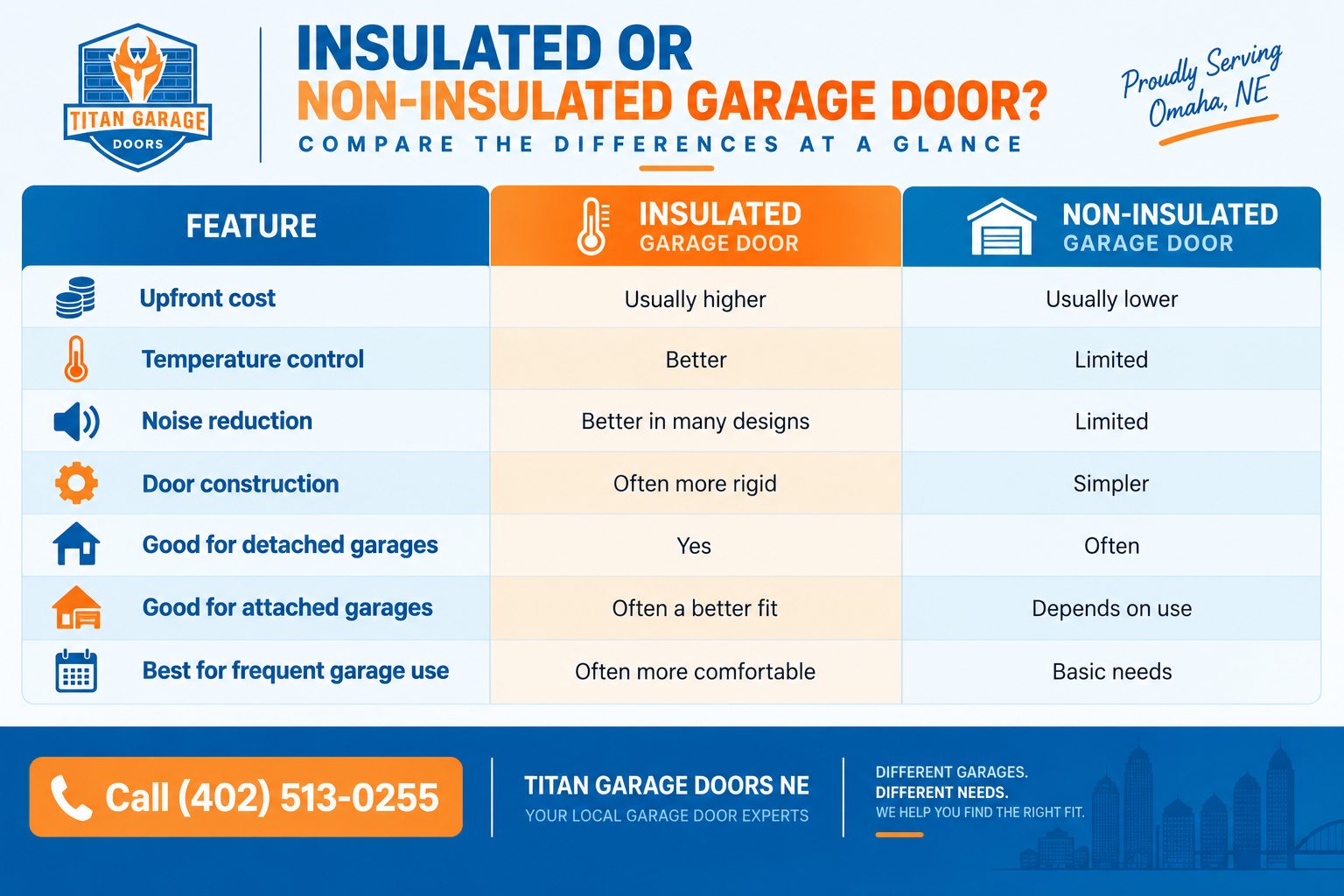
However, neither option is automatically better. The right choice depends on what you need the garage to do.
When Non-Insulated Garage Doors Make Sense
For many homeowners, paying extra for insulation is not always necessary.
Non-insulated garage doors often make sense when the garage is detached from the home and primarily stores vehicles, tools, lawn equipment, or other items that are not sensitive to temperature. They can also be a good fit when your main goal is keeping the replacement budget manageable.
You may want to consider a non-insulated door if:
- Your garage is detached from your house.
- You mainly use the garage for parking.
- You rarely spend long periods inside the space.
- Temperature changes inside the garage do not bother you.
- Lower upfront cost matters more than added comfort.
- You have basic storage needs.
For example, someone with a detached garage in Benson may not notice enough benefit from insulation to justify paying more. In that situation, a well-installed non-insulated door may be the practical choice.
When an Insulated Garage Door Is Worth It
The decision changes when the garage connects directly to your home. If a bedroom, kitchen, family room, or other living space sits beside or above the garage, temperature changes inside the garage can become more noticeable.
An insulated door may also make sense if you regularly use the garage for hobbies, exercise, woodworking, car projects, or other activities.
Consider an insulated garage door if:
- Your garage is attached to the home.
- A living space sits above or beside the garage.
- You spend a lot of time inside the garage.
- The garage becomes very hot in summer or cold in winter.
- You want better noise control.
- You prefer a more substantial door construction.
Omaha’s seasonal weather makes these factors worth considering. Summers can get hot, while winter brings freezing temperatures. An insulated door will not turn the garage into a heated or air-conditioned room, but it can slow down how quickly outdoor temperatures affect the space.
What Do You Gain With Garage Door Insulation?
Homeowners often focus only on energy savings when comparing doors. In reality, insulation can affect several parts of everyday garage use. The benefits are easier to understand when you look at them separately.
1. Better Temperature Control
An insulated garage door slows heat transfer through the door panels. During an Omaha winter, that can help the garage hold onto indoor warmth longer than a basic non-insulated door. During summer, insulation can help reduce how quickly outdoor heat moves through the door.
However, insulation only works as part of the overall garage. If the walls and ceiling have little insulation or the garage door weather seal has large gaps, upgrading the door alone may not make a dramatic difference.
For homeowners focused on comfort, it helps to look at the entire opening instead of only the door panels.
2. Less Noise
Insulated garage doors often use layered construction, which can help reduce some outside noise and vibration. That may be useful if you live near a busier street or spend time working inside the garage. It can also make the door feel quieter during normal operation.
Still, insulation cannot fix mechanical noise. If your garage door suddenly starts grinding, shaking, popping, or scraping, the problem may involve rollers, tracks, springs, or another part of the system. In that case, schedule garage door repair in Omaha rather than assuming a new insulated door will solve the issue.
3. A More Rigid Door
Many insulated garage doors have multiple layers, which can make the panels feel stronger and more solid. That added rigidity may be useful for homeowners who want a substantial door, but insulation alone does not determine durability.
A garage door’s lifespan also depends on the material, hardware, installation quality, maintenance, and how often you use it. A properly installed and maintained non-insulated garage door can still provide years of dependable service.
Insulated or Non-Insulated Garage Door? Use This Checklist
If you are still unsure, focus on your actual garage setup rather than comparing features on paper.
Choose a non-insulated garage door if:
- Your garage is detached.
- You mainly use it for parking or storage.
- Temperature control is not important.
- You spend little time inside the garage.
- Lower upfront cost is your main priority.
Consider an insulated garage door if:
- Your garage is attached to your home.
- A bedroom or living area sits above or beside it.
- You frequently work or spend time in the garage.
- Temperature changes make the space uncomfortable.
- You want better noise control.
- You plan to stay in the home long enough to enjoy the upgrade.
There is no need to buy more doors than your home requires. At the same time, choosing based only on the lowest price can leave you wishing you had considered comfort and daily use.
FAQs About Insulated and Non-Insulated Garage Doors
A few additional questions often come up before homeowners make their final choice.
Can I add insulation to a non-insulated garage door later?
Sometimes. Insulation kits are available for certain doors, but adding material also adds weight. Before changing the door, make sure the existing lifting system can safely handle the additional load.
What does R-value mean for a garage door?
R-value measures how well insulation resists heat flow. In general, a higher number means greater insulating ability. However, R-value should be only one part of your decision.
Does an insulated door keep my garage warm during winter?
Not by itself. Insulation slows heat loss, but it does not create heat. The walls, ceiling, weather seals, windows, and heating system also influence the garage temperature.
Are non-insulated garage doors a bad option in Omaha?
No. They can work very well for detached garages and basic parking or storage needs. The important thing is choosing a door that matches how you use the space.
Should I replace a working garage door just for insulation?
Not necessarily. If your existing door is still safe and reliable, check the condition of the weather seals and the rest of the garage first. Insulation becomes especially worth considering when the door is already due for replacement.
Is an Insulated Garage Door Worth the Extra Cost?
An insulated garage door usually costs more upfront, but the extra cost can make sense if your garage is attached to the home, has living space above or beside it, or gets used often. It can also help reduce temperature swings and outside noise, which may make the garage more comfortable during Omaha’s hot summers and cold winters.
On the other hand, non-insulated garage doors are still a practical choice for detached garages, basic storage, and homeowners who want to keep the initial cost lower.
The best option depends on your home, budget, and how you use the garage. If you are planning for a garage door replacement, comparing both options with a professional can help you choose the right fit.
Ask Titan Garage Doors NE About Insulated Garage Doors
Choosing between insulated and non-insulated garage doors should come down to what makes sense for your home, budget, and daily routine.
Titan Garage Doors NE can help you compare insulation levels, door styles, materials, and replacement options from well-known brands such as Amarr and Clopay. We can also inspect your current garage door system and explain whether any hardware, weather seals, or other components need attention before installation.
If you are planning a larger upgrade, we also offer monthly payment plans to help make your garage door replacement easier to manage.
Thinking about upgrading your garage door? Contact Titan Garage Doors NE at (402) 513-0255 and ask about insulated garage door options for your Omaha home.