HAVE ANY QUESTIONS?
  15 YEARS OF EXPERIENCE

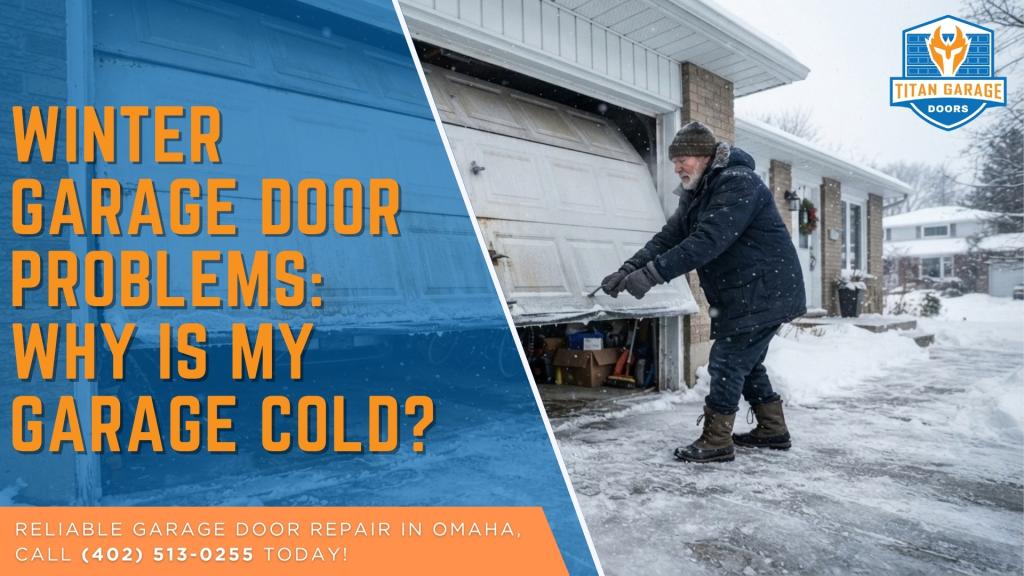
A winter garage door problem can show up on the coldest mornings in Omaha. You step into the garage and immediately notice the temperature difference. Maybe you feel cold air around your feet. Perhaps there’s daylight under one corner of the door. In other cases, the entire garage simply feels much colder than you remember.
So, where is that cold coming from?
Winter Garage Door Problem: Where Is the Cold Air Coming From?
Before assuming you need a new garage door, take a few minutes to inspect the opening. Close the door completely and stand inside the garage during daylight. Look along the bottom, both sides, and across the top. Do you see daylight anywhere?
Next, place your hand near the edges of the closed door without touching any moving parts. A noticeable draft can help you narrow down the problem. Pay attention to the shape of any gap you find. A thin, consistent opening may point to worn weatherstripping. A large gap that appears mainly on one side could indicate a different issue.
If the door seals well around the edges but the garage still feels unusually cold, the door itself or another part of the garage may be responsible.
Once you know where the cold seems to come from, you can investigate the most likely causes.
1. Worn Garage Door Weather Seals Let Cold Air Through
The garage door weather seal creates a barrier around the closed door. You will usually find weatherstripping along the bottom, sides, and top of the opening.
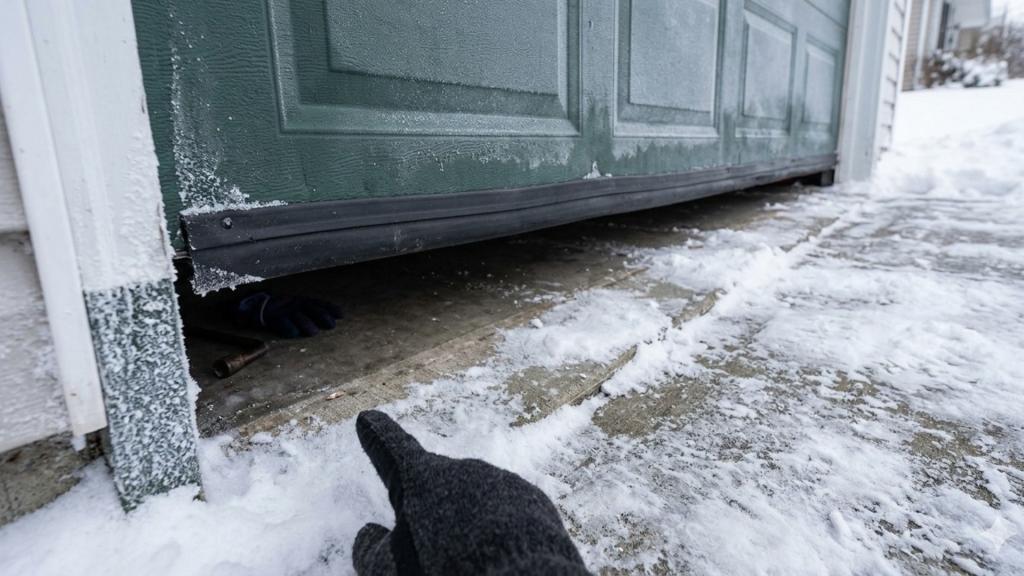
Over time, these flexible materials can flatten, crack, harden, tear, or pull away. The bottom seal often shows wear first because it repeatedly contacts the garage floor. If it no longer touches the concrete evenly, cold air can enter underneath the door.
Side and top weatherstripping can cause similar problems. Look for brittle material, loose sections, or visible daylight. If the door sits correctly and the seal itself has failed, replacing the worn weatherstripping may solve the problem. However, do not assume that every gap needs a thicker seal.
2. An Uneven Garage Door Can Leave Cold-Air Gaps
What if the weather seal looks fine, but one corner of the door still has a noticeable opening? The garage door may not be sitting evenly.
Door balance, track alignment, rollers, cables, or other hardware can affect how the door travels and where it rests when closed. If one side sits higher than the other, the bottom seal may not make consistent contact with the floor. You may also notice that the door shakes, moves unevenly, or sounds different during operation.
In this situation, replacing the garage door weather seal alone may not solve the cold-air problem. The new seal could still leave a gap because the underlying door issue remains.
If the door looks crooked or moves unevenly, arrange garage door repair in Omaha rather than trying to adjust springs, cables, or tracks yourself.
3. The Garage Floor May Be Creating the Gap
Sometimes the door and weatherstripping are working properly, but the concrete underneath them is not level. Garage floors can develop cracks, low spots, or uneven areas over time. If the concrete dips under one part of the door, a standard bottom seal may not reach the floor evenly.
Look at the bottom of the closed door from inside. Does the seal touch the floor across most of the opening but leave a gap in one specific area? That may point toward the floor rather than the garage door.
This distinction matters because installing new weatherstripping will not necessarily correct a significant low spot in the concrete. Identifying the real cause first helps you avoid paying for a repair that does not solve the draft.
4. A Non-Insulated Garage Door Can Make the Whole Space Feel Colder
What if you cannot find a major draft around the door? The door itself may be transferring outdoor temperatures into the garage.
Basic non-insulated doors can work well for parking and storage, but they offer less resistance to heat transfer. During an Omaha winter, that can make the garage feel much closer to the outdoor temperature.
An insulated garage door contains material that slows heat movement through the panels. This can be especially useful for an attached garage or one with living space above or beside it. Still, garage door insulation has limits. It does not generate heat, and it cannot make an unheated garage feel like a heated room.
If your existing door is already due for garage door replacement, insulation is worth comparing when choosing the new one. Our guide to insulated vs. non-insulated garage doors explains the differences in comfort, noise control, cost, and everyday use so you can decide which option makes more sense for your home.
5. The Cold May Be Coming From Somewhere Else in the Garage
The garage door is a large opening, so it gets plenty of attention. However, it is not the only place where cold can enter. Check the rest of the garage as well.
Poorly insulated walls or ceilings can contribute to a cold space. Drafty windows, exterior entry doors, vents, and other openings may also allow cold air inside. This becomes especially important when the garage door appears well sealed.
For example, replacing a perfectly good garage door weather seal will not solve a draft coming from an old side door. Likewise, upgrading to an insulated garage door cannot fully compensate for a garage with little wall or ceiling insulation.
The goal is to identify the weak point instead of assuming the garage door causes every temperature problem.
Other Signs of a Winter Garage Door Problem
Once you have checked where the cold is coming from, take a few minutes to watch how the garage door operates. Cold weather can make existing wear easier to notice. These issues may not be responsible for the temperature inside your garage, but catching them early can help prevent a winter breakdown.
1. Worn Rollers Can Cause More Noise and Rough Movement
Rollers guide the door through the tracks. As they wear, you may hear rattling, squeaking, or grinding, and the door may start moving less smoothly. If the sound is new or the door shakes during operation, have the system inspected rather than ignoring it through winter.
2. Ice Can Freeze Your Garage Door to the Floor
Snow, slush, and melting ice often collect where the bottom seal meets the concrete. When temperatures drop, that moisture can freeze and hold the door down. If the opener runs but the door doesn’t move, stop operating it—repeated attempts only strain the system.
Instead, carefully clear visible ice around the bottom edge before trying to open the door.
3. Worn Springs or Hardware Can Become More Noticeable
A garage door should not rely on the opener to carry its full weight. Springs help balance the door so it can move properly. If the door suddenly feels heavy, hangs unevenly, or struggles to move, stop using it and schedule an inspection.
Do not attempt to adjust garage door springs or cables yourself. These parts operate under significant tension.
4. Poor Lubrication Can Make Winter Operation Rougher
Cold weather can also make poor lubrication or existing wear more noticeable. If the door begins moving roughly or making unusual sounds, seasonal garage door maintenance can help determine whether the system simply needs proper lubrication or whether a component has started to wear.
However, avoid spraying lubricant randomly across the tracks and hardware. Different parts have different maintenance requirements.
How to Check for a Winter Garage Door Problem Before It Gets Worse
You do not need to take anything apart to perform a useful seasonal inspection. A visual check can tell you quite a bit.
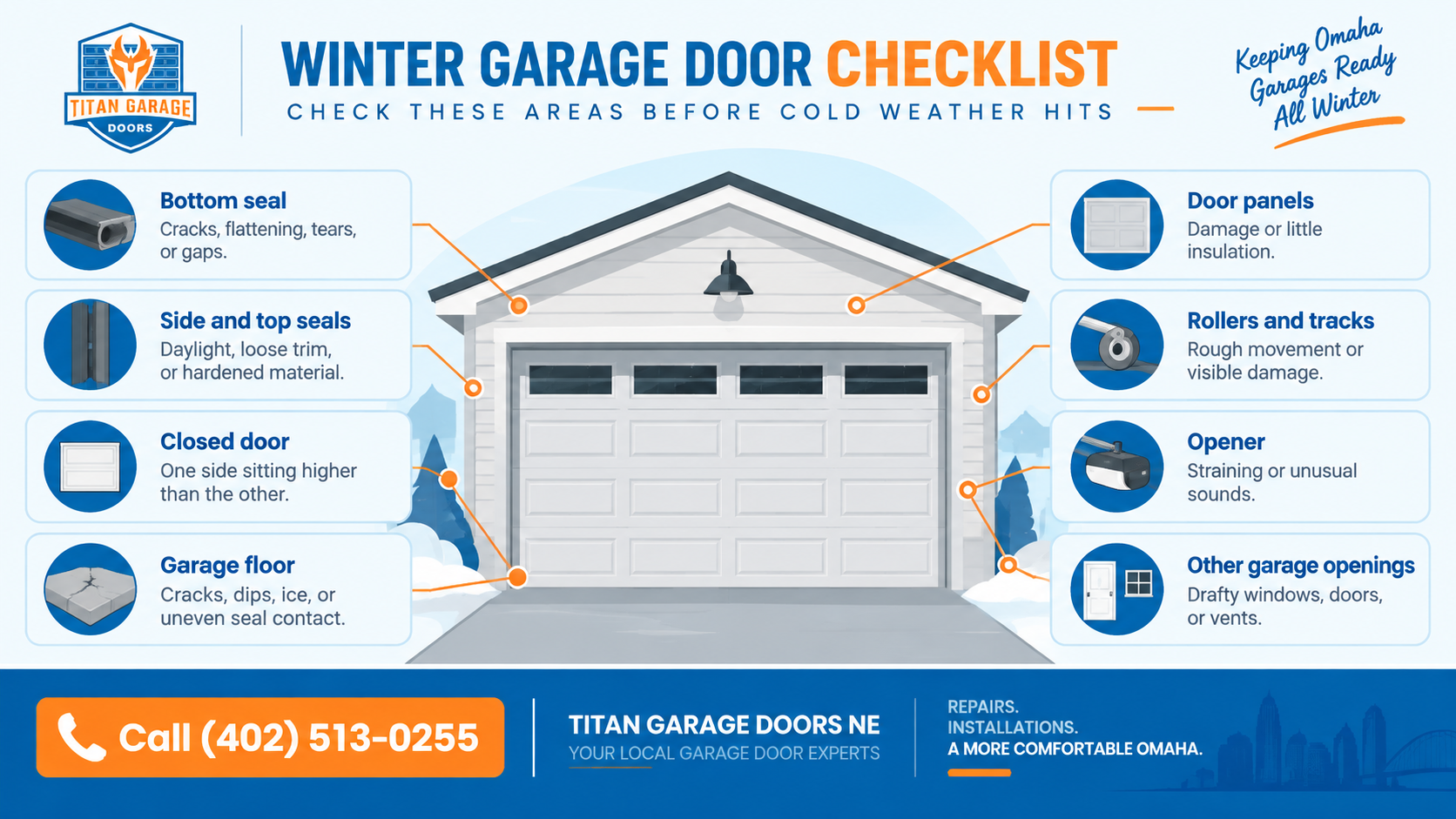
Even if everything looks normal, a garage door that behaves differently may have hidden issues. A professional inspection can uncover problems before they worsen—book your garage door service now to stay ahead of the cold weather.
FAQs About Winter Garage Door Problems
A few winter situations deserve extra attention because they can easily be mistaken for normal cold-weather behavior.
Why is my garage colder even though the door seal looks good?
The door may have little insulation, or cold air may be entering through another part of the garage. Check the side and top seals, windows, exterior doors, walls, and ceiling before assuming the bottom seal has failed.
Should I replace my garage door weather seal before winter?
Replace weatherstripping when it is cracked, flattened, missing, or no longer makes proper contact. If the gap is uneven, have the door inspected first.
Will garage door insulation keep my garage warm?
Insulation slows heat transfer, but it does not produce heat. The rest of the garage construction also affects the indoor temperature.
Why does my garage door get louder when it is cold?
Cold weather may make existing wear more noticeable. Worn rollers, hinges, or other moving parts can cause new noises or rough movement and should be inspected if the change persists.
Can I use my opener if the garage door is frozen shut?
Do not force it. Stop the opener and check for ice along the bottom edge. Forcing a frozen door can damage the seal or place additional strain on the opener and other components.
Prepare Your Garage Door Before Omaha Winter Arrives
A cold garage does not always mean you need a new door. The problem may come from a worn weather seal, an uneven door, the garage floor, limited insulation, or another opening in the garage. At the same time, winter can expose worn rollers, weak hardware, and other issues that deserve attention before temperatures fall further.
Titan Garage Doors NE provides garage door repair and maintenance in Omaha to help homeowners prepare for colder weather. Our certified technicians can inspect the seals, door balance, rollers, tracks, opener, and other key components and explain what actually needs attention.
Do not wait for a small winter garage door problem to become an unexpected breakdown. Call Titan Garage Doors NE at (402) 513-0255 to schedule a garage door service before winter.