HAVE ANY QUESTIONS?
 15 YEARS OF EXPERIENCE

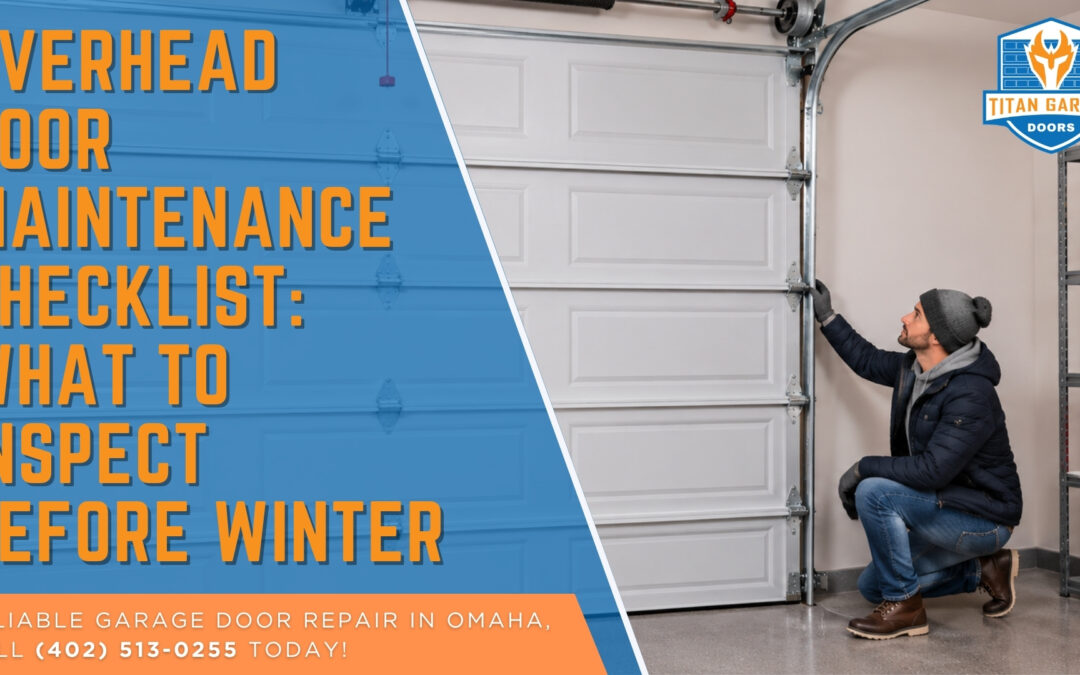
Winter mornings in Omaha are cold enough without a garage door that refuses to open. You press the remote, hear the opener struggle, and realize your car isn’t going anywhere. Not exactly how you wanted to start the day, right? Following an overhead door maintenance checklist before winter can help you spot worn parts, damaged seals, and other problems before freezing temperatures make them more frustrating.
Snow, ice, and sudden temperature changes are common in Omaha and Lincoln. While a healthy garage door can handle winter weather, existing wear may become more noticeable when temperatures drop. The good news is that you don’t need special tools to check for warning signs. A few safe visual inspections can tell you when it’s time to schedule professional maintenance.
Why an Overhead Door Maintenance Checklist Is Important Before Winter
Your garage door works throughout the year, but winter introduces a few extra challenges. Moisture can collect around metal components, freezing temperatures can stiffen older weather seals, and ice can form along the bottom of the door. Meanwhile, worn rollers and loose hardware may continue to deteriorate with daily use.
Imagine heading out from your home in Millard on a snowy morning, only to discover that your garage door has frozen to the driveway. Forcing it open could damage the bottom seal or put unnecessary strain on the opener. That’s why preventive garage door maintenance matters. Checking the door before winter gives you time to address problems rather than dealing with them during a cold-weather breakdown.
7 Essential Checks for Your Overhead Door Maintenance Checklist
You can complete most of these checks by looking at the garage door while it remains closed. Before starting, keep children and pets away from the area. Never touch or adjust springs, cables, tracks, or other tension-loaded components.
Here’s what to inspect before Nebraska’s winter weather arrives:
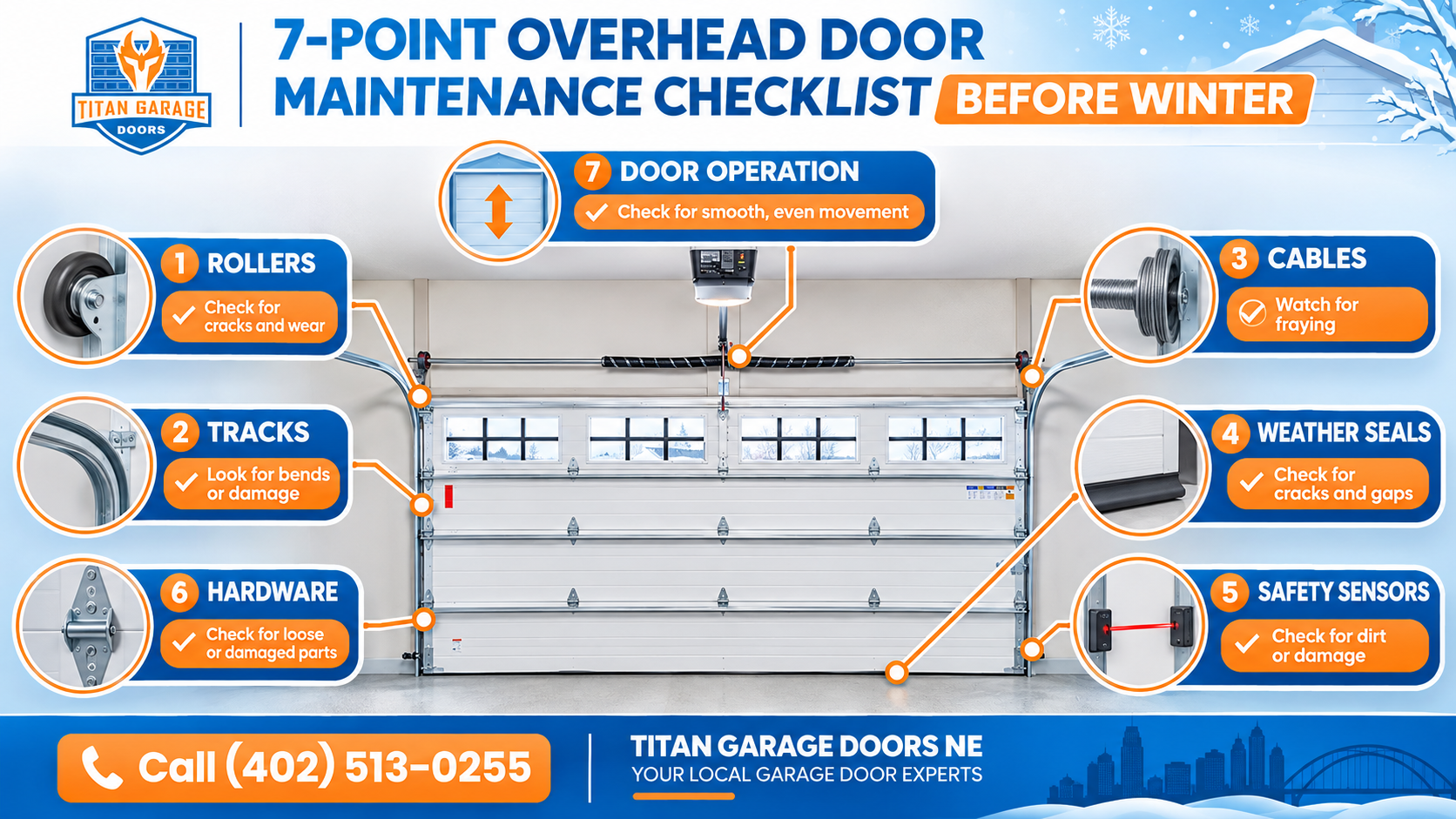
1. Inspect Garage Door Rollers for Visible Wear
Garage door rollers help the door travel along its tracks. When they wear out, you may notice rattling, shaking, or rough movement. With the door closed, look at the accessible rollers from a safe distance.
Check for cracked roller wheels, visible damage, or rollers that appear out of position. Don’t reach into the tracks or try to move the rollers yourself. If your door has become noticeably louder, the rollers may need professional attention.
For more information about unusual sounds, read our previous blog, Garage Door Making Noise? How to Tell If It Needs a Tune-Up.
2. Look for Damage Along the Garage Door Tracks
The metal tracks guide your garage door as it opens and closes. During your overhead door inspection, look for visible bends, dents, rust, or loose debris around accessible track areas.
A damaged track may cause the door to shake, scrape, or move unevenly. However, even a small alignment problem can become more serious if you continue operating the door.
You can clear loose leaves or dirt from the floor near the tracks, but avoid loosening brackets or attempting to straighten metal components. If the tracks look bent or damaged, schedule a same-day garage door inspection.
3. Check Garage Door Cables for Fraying or Damage
Garage door cables work with the spring system to help raise and lower the door. Because these cables support heavy loads, damaged cables can create serious safety risks.
Look for obvious warning signs, including frayed strands, hanging cables, or cables that appear loose or disconnected. However, never pull, tighten, or attempt to reconnect a garage door cable. Even when the door is closed, parts of the lifting system may remain under significant tension.
If you notice cable damage, stop using the door and contact a garage door cable repair technician before operating it again.
4. Examine Garage Door Weather Seals for Gaps
Your garage door weather seals help limit drafts, moisture, and debris around the door’s edges. Before winter, inspect the bottom seal and the weatherstripping along the sides and top. Look for cracks, flattened sections, missing pieces, or visible gaps where cold air and moisture could enter.
You may also notice daylight around the closed door. Damaged garage door weather seals can allow snowmelt and cold air into the garage. However, even a good seal cannot prevent every draft, especially in an uninsulated garage.
If the bottom seal has become brittle or torn, ask a technician whether replacement would help improve the door’s fit.
5. Check Garage Door Safety Sensors
Most modern automatic garage door openers use photo-eye sensors near the bottom of the opening. These sensors help detect objects in the door’s path and prevent the door from closing when the beam is interrupted.
Start by checking whether the sensor lenses look clean and whether anything blocks the space between them. If the lenses are dusty, gently wipe their accessible surfaces with a soft cloth while the door remains stationary. Also look for damaged wires or sensor brackets that appear out of position.
If the sensors show a fault or the door doesn’t respond correctly, arrange a professional garage door safety inspection. Don’t bypass the sensors to force the door closed.
6. Look for Loose or Damaged Garage Door Hardware
Your garage door contains hinges, brackets, bolts, and other hardware that help hold its sections together. Over time, repeated movement can cause wear or loosen certain components.
Look for cracked hinges, missing fasteners, rust, or brackets that appear damaged. Pay particular attention to hardware near the springs and cables, but keep your distance. Although tightening a loose bolt might seem simple, some garage door brackets connect to components under high tension.
Leave hardware adjustments to a trained technician who can identify which parts are safe to service.
7. Observe How Your Garage Door Opens and Closes
The final step in your garage door maintenance checklist involves checking how the system operates. Only perform this check if the door has no visible damage, loose cables, broken springs, or other safety concerns.
During one normal operating cycle, observe the door from a safe distance. Ask yourself:
- Does the door open and close smoothly?
- Does it make new squeaking, rattling, or grinding sounds?
- Does one side move differently from the other?
- Does the opener sound unusually strained?
- Does the door close fully without leaving a noticeable gap?
If the door jerks, tilts, scrapes, or struggles, stop operating it and schedule an inspection. A professional can also test door balance and automatic safety features as part of a complete tune-up.
Quick Winter Garage Door Maintenance Checklist
Use this table as a simple reference before the first major cold spell.
| Component | What to Look For | When to Call a Technician |
|---|---|---|
| Rollers | Cracks or visible wear | Rattling or rough movement |
| Tracks | Bends, dents, or rust | Scraping or damaged tracks |
| Cables | Fraying or loose strands | Any visible cable damage |
| Weather seals | Cracks or gaps | Torn or poorly fitting seals |
| Safety sensors | Dirt or visible damage | Sensor faults or closing problems |
| Hardware | Rust, cracks, or missing parts | Loose or damaged components |
| Door operation | Smooth, steady movement | Jerking, tilting, or unusual noise |
This checklist helps identify visible problems, but it doesn’t replace a professional inspection of the spring system, door balance, and safety features.
When Should You Schedule a Professional Overhead Door Inspection?
An annual garage door inspection is a practical starting point for many residential garage doors. However, you shouldn’t wait for a scheduled appointment if the door starts making unusual noises, moves unevenly, or shows signs of damaged cables or springs.
A technician can inspect the lifting system, check door balance, assess worn rollers and hardware, and test the opener’s safety features. For Omaha homeowners, scheduling preventive maintenance during fall can help identify problems before winter increases the inconvenience of a breakdown.
FAQs About Overhead Door Maintenance Before Winter
A few common questions can help you decide how to prepare your garage door for colder weather.
How often should I follow an overhead door maintenance checklist?
A seasonal visual check is useful, especially before winter. You should also arrange a professional inspection about once a year or sooner if you notice damage or changes in operation.
Can freezing temperatures damage garage door weather seals?
Yes. Older rubber or vinyl seals may become less flexible in cold temperatures. Existing cracks and wear can also make it easier for moisture and drafts to enter.
Should I lubricate my garage door tracks before winter?
No. Garage door tracks generally shouldn’t receive grease because it can collect dirt and interfere with roller movement. A technician can lubricate the appropriate hinges, bearings, and other components according to the manufacturer’s recommendations.
Is it safe to use a garage door with a frayed cable?
No. A frayed cable may fail under load. Stop using the garage door and contact a garage door repair Omaha expert.
Prepare Your Garage Door for Winter With Titan Garage Doors NE
A little preparation now can help you avoid a garage door problem when Omaha temperatures drop. At Titan Garage Doors NE, we provide professional garage door inspections, tune-ups, and repairs for homeowners in Omaha, Lincoln, and surrounding Nebraska communities. Our Yelp-verified team checks for worn components, explains what needs attention, and provides clear pricing before starting approved repairs.
Concerned about maintenance or repair costs? Ask about our ongoing discounts and special offers, including available savings for qualifying customers. We also offer flexible monthly payment plans for eligible repairs, subject to financing approval and terms.
Don’t wait until snow and ice make an existing garage door problem worse. Call Titan Garage Doors NE at (402) 513-0255 today to schedule your overhead door inspection and get your garage door ready for winter.