HAVE ANY QUESTIONS?
  15 YEARS OF EXPERIENCE

A small gap around your garage door may not seem like a big problem in late summer. Then cooler Omaha weather arrives, and suddenly you feel a draft near the door, find leaves blowing into the garage, or notice moisture along the floor. Learning how to seal garage door gaps before fall can help you keep outside air, pests, dirt, and water where they belong. Fortunately, some sealing problems are simple enough for homeowners to handle. Others point to an uneven door, worn hardware, or a track problem that weatherstripping alone will not fix.
At Titan Garage Doors NE, we help Omaha homeowners prepare their garage doors for changing Nebraska weather. This guide will show you where gaps commonly develop, how to identify the right seal, what you can safely replace yourself, and when a professional weather seal replacement makes more sense.
The first step is figuring out exactly where the gap is coming from.
Find Out Where Your Garage Door Is Letting Air In
Inspect the garage door while it is completely closed. Look around the bottom, both sides, and the top. Daylight makes gaps easier to spot. Stand inside the garage during the day and turn off the lights. If you can clearly see sunlight around part of the closed door, inspect that area more closely.
Pay attention to these common locations:
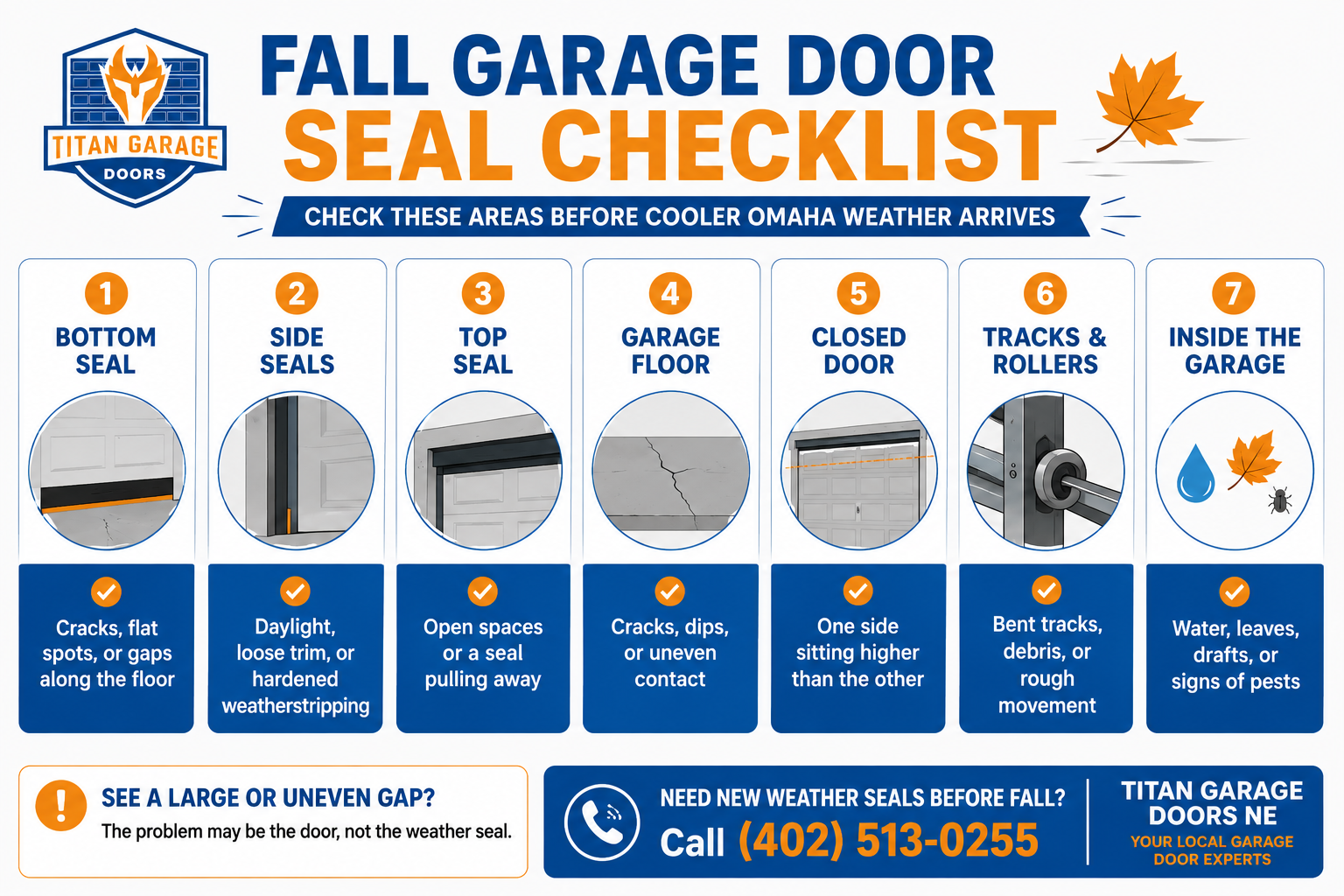
This distinction matters because replacing weatherstripping will not correct every type of gap.
Check the Existing Weather Seal for Wear
Once you locate the opening, inspect the seal itself. Rubber and vinyl seals become less flexible over time. Nebraska heat, cold, moisture, and repeated garage door movement can eventually cause the material to flatten, crack, split, or pull away.
Look for seals that:
- Have visible cracks or tears
- Feel hard instead of flexible
- No longer touch the floor
- Have flattened sections
- Pull away from the door frame
- Leave visible daylight around the closed door
If the seal itself looks damaged but the door closes evenly, weather seal replacement may solve the problem. However, if the door sits crooked or leaves a much larger opening on one side, investigate the door before replacing the garage door seal.
How to Seal Garage Door Gaps
Once you know where the gap is coming from, you can decide whether a simple weather seal replacement will solve it. The process is different for the bottom, sides, and top of the door, so handle each area separately.
How to Seal Gaps at the Bottom of the Garage Door
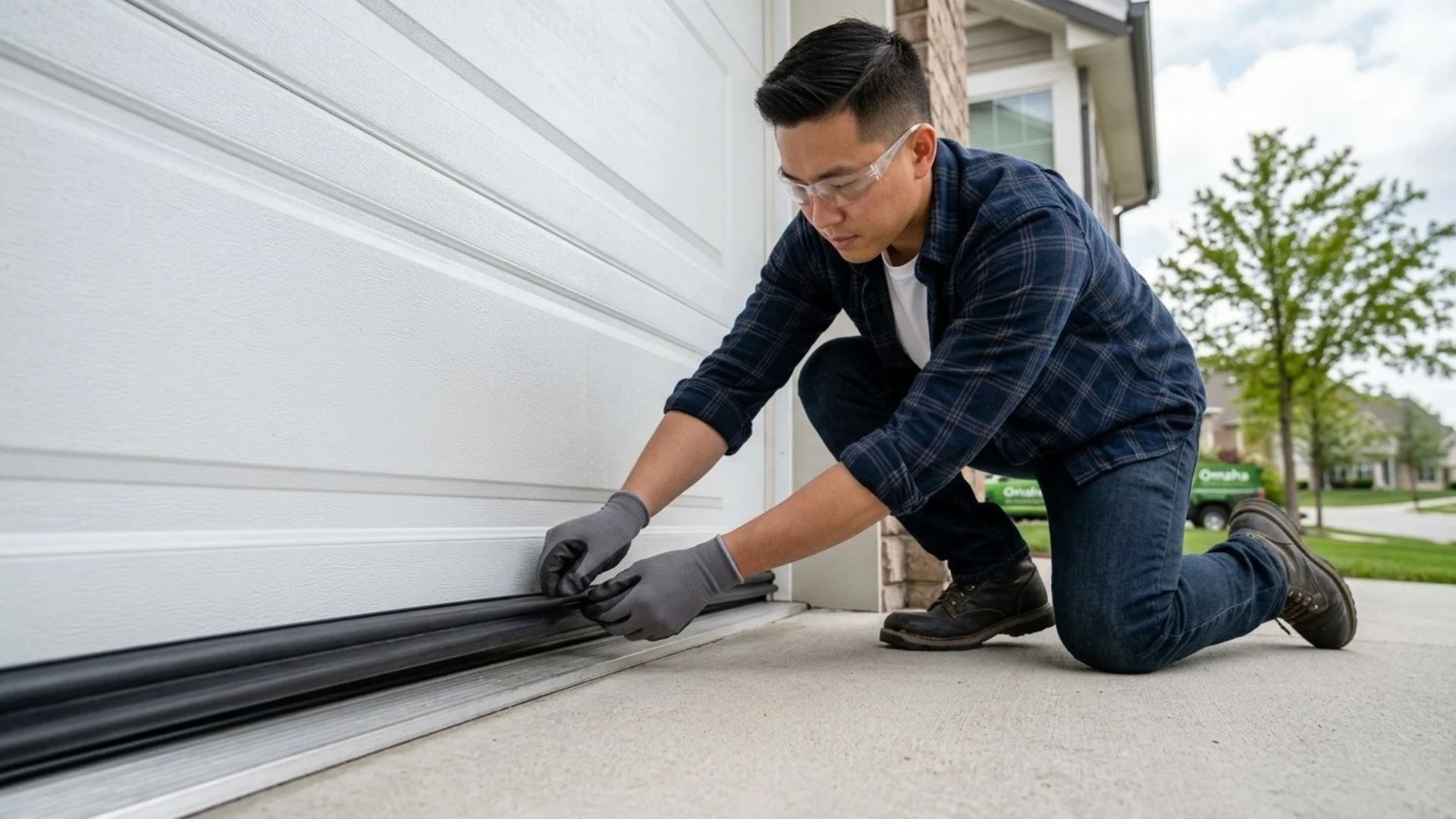
The bottom seal takes the most wear because it touches the floor every time the door closes. Over time, it can flatten, crack, or pull away from the retainer.
Step 1: Inspect the existing bottom seal.
Close the garage door and look for daylight, cracks, flattened rubber, or sections that no longer touch the floor.
Step 2: Measure the door and identify the seal type.
Measure the width of the garage door. Then check the shape of the existing seal and the channel that holds it. Garage doors use different seal styles, so choose a replacement that matches your current retainer.
Step 3: Remove the worn seal.
Disconnect the automatic opener before working near the bottom of the door. Slide the old seal out of the retainer if your system allows it. Do not remove cables, brackets, or spring-related hardware.
Step 4: Clean the retainer.
Remove dirt and debris from the bottom channel. A clean retainer helps the new seal slide into place more easily.
Step 5: Install the new bottom seal.
Feed the replacement seal through the retainer and work it across the full width of the door. Avoid stretching the material too tightly.
Step 6: Test the seal.
Close the door and check for even contact with the garage floor. The seal should compress slightly without becoming crushed.
If one corner still has a large gap, the floor may be uneven, or the door may need adjustment.
How to Seal Gaps Along the Sides of the Garage Door
Side weatherstripping closes the narrow space between the garage door and the frame. When it becomes hard, cracked, or bent away from the door, drafts and moisture can enter.
Step 1: Check both side seals.
Close the garage door and inspect the weatherstripping from top to bottom. Look for daylight, cracks, loose sections, or areas where the flexible edge no longer touches the door.
Step 2: Remove damaged weatherstripping.
Carefully remove the old trim or seal from the door frame. Take your time so you do not damage the surrounding wood or surface.
Step 3: Measure each side.
Measure from the floor to the top of the opening. Cut the new weatherstripping to fit each side.
Step 4: Position the new seal.
With the garage door closed, place the flexible edge so it lightly rests against the outside face of the door. It should cover the gap without pressing tightly against the panels.
Step 5: Secure the weatherstripping.
Fasten it to the frame according to the product instructions. Keep the seal straight as you work upward.
Step 6: Open and close the door.
Watch the weatherstripping as the door moves. It should stay in place without catching, folding, or creating extra resistance.
How to Seal Gaps at the Top of the Garage Door
The top seal helps block air, dust, and moisture where the upper section of the garage door meets the header.
Step 1: Inspect the top edge.
Close the door and look for daylight across the top. Check whether the existing seal is cracked, loose, or no longer touching the door.
Step 2: Remove the old seal if needed.
Carefully take off damaged weatherstripping and clean the surface before installing the replacement.
Step 3: Measure the width of the opening.
Measure across the top of the garage door frame and cut the new weatherstripping to the correct length.
Step 4: Position the seal with the door closed.
Place the flexible edge so it lightly touches the top section of the garage door. Avoid pushing it too tightly against the door.
Step 5: Secure it evenly.
Fasten the seal across the header while keeping it straight and level.
Step 6: Test the garage door.
Run the door through a complete opening and closing cycle. Make sure the top seal stays in position and does not interfere with normal movement.
After sealing all three areas, inspect the closed door again from inside the garage. If you still see large gaps, especially on only one side, the problem may involve door alignment, tracks, cables, or balance rather than weatherstripping alone. Contact Titan Garage Doors NE for an expert garage door inspection.
Do Not Use Weatherstripping to Hide a Door Alignment Problem
This is an important point for homeowners. If your garage door hangs crooked, one side reaches the floor before the other, or the bottom gap changes dramatically from left to right, the problem may involve the tracks, cables, springs, or door balance. Adding more rubber will not fix that.
An uneven door can also place extra stress on the garage door opener. Over time, that resistance may lead to additional problems and increase your overall garage door repair cost.
Schedule professional garage door repair in Omaha if the door:
- Sits unevenly when closed
- Has a large gap on only one side
- Shakes while moving
- Feels unusually heavy
- Has a loose or damaged cable
- Comes off the track
- Stops before reaching the floor
A technician can correct the cause first and then determine whether the seals also need replacement.
Frequently Asked Questions About Garage Door Gaps
Should a garage door seal touch the floor?
Yes. The bottom seal should make consistent contact with the floor when the door closes. It should compress enough to close small gaps without becoming excessively crushed.
Can mice get through a gap under a garage door?
Small rodents can squeeze through surprisingly narrow openings. Replacing damaged weatherstripping and closing obvious gaps can make the garage less accessible to pests.
Can I add weatherstripping over the existing garage door seal?
Usually, replacing worn material provides a cleaner and more reliable result than layering a new seal over damaged weatherstripping.
How do I know which garage door bottom seal I need?
Check the shape of the existing seal and the retainer that holds it. Because several designs exist, matching the replacement to your current system is important.
Will a new weather seal stop water from entering my garage?
A properly installed seal can reduce water entering through small gaps. However, drainage problems, an uneven driveway, or water flowing toward the garage may require a different solution.
Seal Garage Door Gaps Before Cooler Omaha Weather Arrives
If you want to seal garage door gaps before fall, start by finding where air, light, or moisture enters. Replace worn bottom, side, or top weatherstripping when the door itself closes evenly. Then check the finished seal to make sure it makes consistent contact without restricting movement.
If the gap comes from a crooked door, damaged track, cable problem, or uneven operation, fix that issue first. Weatherstripping should seal a properly operating garage door, not hide a mechanical problem.
While you are checking the seals, it is also a good time to schedule garage door maintenance. A seasonal tune-up can help catch worn rollers, loose hardware, balance issues, and other small problems before colder weather puts more strain on the system.
Book Garage Door Weather Seal Replacement in Omaha, NE
If your garage door lets in drafts, moisture, leaves, or pests, Titan Garage Doors NE can inspect the opening and determine whether you need new weatherstripping or a garage door adjustment.
We provide professional weather seal replacement and complete garage door repair throughout Omaha and nearby communities. Contact Titan Garage Doors NE at (402) 513-0255 to schedule a free consultation and get your garage ready before cooler fall weather arrives.