HAVE ANY QUESTIONS?
  15 YEARS OF EXPERIENCE

Your garage door opener stops halfway through closing. Maybe it makes a grinding sound, responds only after several clicks, or suddenly refuses to work. Now you have a decision to make: should you fix the existing opener or invest in a new one? Knowing when to repair or replace opener systems can save Omaha homeowners from spending money on the wrong solution.
In this guide, we will help you compare repair and replacement based on the opener’s age, condition, repair history, safety features, and cost. Let’s get started.
Repair or Replace Opener? Check These Warning Signs First
Before deciding between repair and replacement, pay attention to the symptoms. The way your opener behaves can tell you a lot about what may be wrong.
Common warning signs include:
- The opener does not respond to the remote.
- The door stops before opening completely.
- The opener makes grinding or humming sounds.
- The door reverses unexpectedly.
- The motor runs, but the door does not move.
- The opener works only some of the time.
- The door moves noticeably slower than before.
- The opener shakes or vibrates during operation.
Not every symptom means the opener itself has failed. A broken spring, worn roller, track problem, or unbalanced garage door can make a perfectly usable opener struggle. For that reason, an expert technician should inspect the entire garage door system before recommending a new opener.
When Garage Opener Repair Makes More Sense
Replacement is not automatically the best answer when something stops working. Many opener problems can be repaired, especially when the unit is relatively new and has otherwise performed reliably. Here are the signs that point to a garage door opener repair:
1. The Opener Has a Minor Problem
A failed remote, dirty sensor, loose connection, or programming issue may have a straightforward solution. For example, if the wall control operates the door but the remote does not, the opener motor may be perfectly fine. The problem could simply involve the remote battery or programming.
2. The Opener Is Relatively New
Age matters when deciding whether to repair or replace opener equipment. A newer unit that has received normal maintenance may still have years of useful service left. Replacing the entire system because of one repairable component may not make financial sense.
3. This Is the First Major Repair
Consider the opener’s repair history. If this is the first real problem you have experienced, repairing it may offer better value. On the other hand, repeated service calls can indicate that several components are beginning to wear out. A professional garage opener repair should solve the underlying problem rather than simply provide a temporary fix.
When Garage Opener Replacement Becomes the Better Choice
At some point, continuing to repair an aging opener stops making sense. Replacement may offer better reliability, safety, and convenience. Here are some signs that lead to a garage opener replacement:
1. The Opener Is Near the End of Its Useful Life
Garage door openers do not last forever. Usage, maintenance, door condition, and opener quality all affect lifespan. An older opener that starts developing frequent problems deserves a closer look. One inexpensive repair may still make sense, but investing heavily in an aging unit can lead to another repair shortly afterward.
2. Repairs Keep Adding Up
Have you called for opener service more than once recently? Repeated repairs can become expensive. Add up what you have already spent and compare that amount with the cost of a modern replacement. If the opener continues failing after repairs, garage opener replacement may provide better long-term value.
3. Important Safety Features Are Missing
Older garage door openers may lack safety features that are standard on modern systems. If your opener was manufactured before 1993, replacement is often the safer choice, especially if it does not have a working external entrapment-protection device such as photo-eye sensors.
Federal law requires residential automatic garage door openers manufactured for sale in the United States on or after January 1, 1993, to meet added entrapment-protection requirements under UL 325. These requirements were created to reduce the risk of people, children, pets, or objects becoming trapped under a closing garage door.
Modern openers may also include rolling-code security, battery backup, automatic closing, and smartphone controls. These added features are useful, but the safety system should come first. If your existing opener predates the 1993 requirements or cannot support modern entrapment-protection features, replacing it usually makes more sense than continuing to invest in repairs.
4. The Opener Is Excessively Noisy
Some older openers simply become loud as they age. A repair may reduce noise when a worn part causes the problem. However, an older chain-driven system may remain noticeably louder than newer alternatives.
This can matter when the garage sits below or beside a bedroom, especially in homes where family members leave early in the morning.
Repair or Replace Opener: Quick Decision Guide
If you are still unsure, compare the condition of your system against this simple guide.
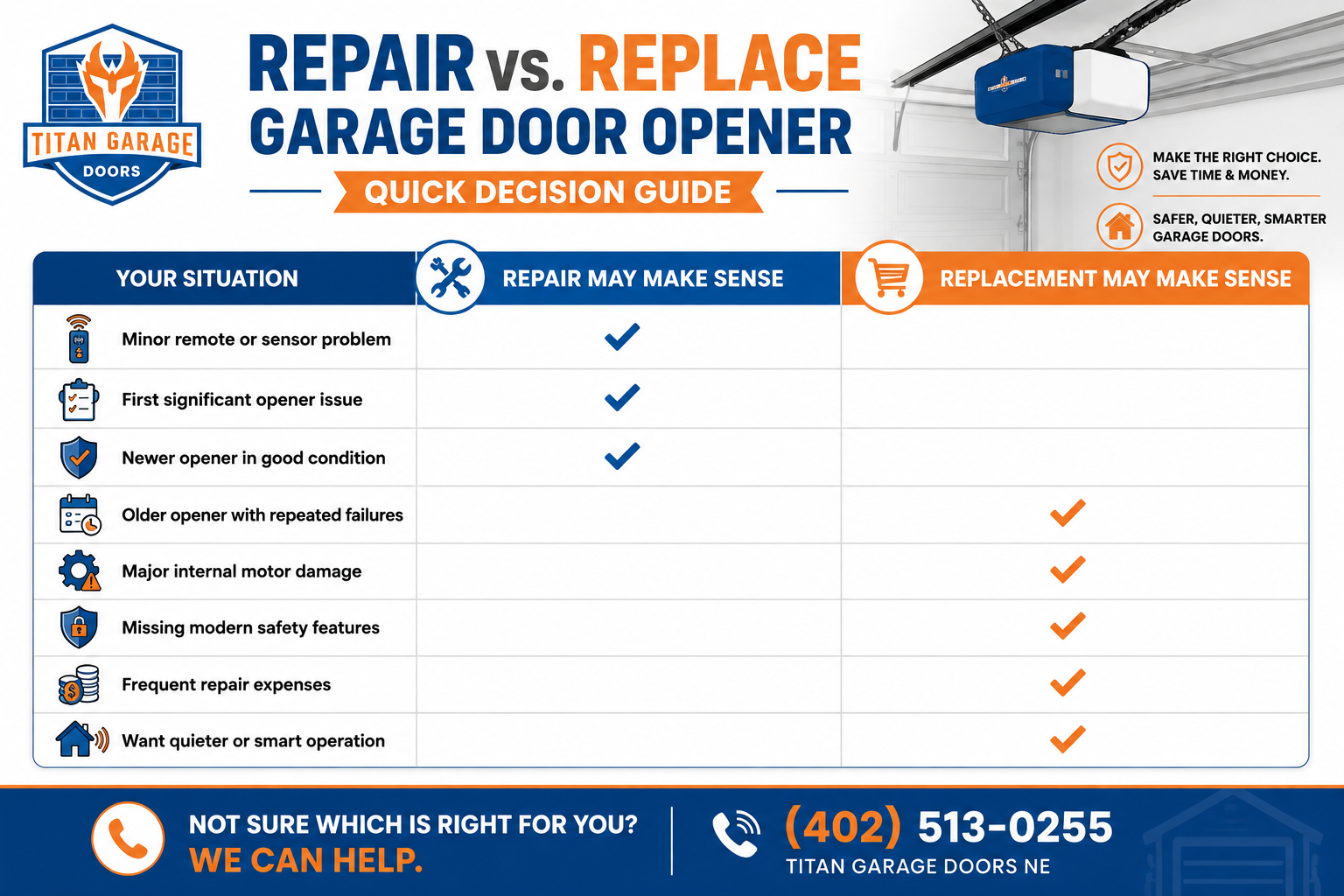
Note: This table provides a starting point, not a final diagnosis. The condition of the garage door itself also matters.
If worn springs or an unbalanced door caused the opener to struggle, those problems need attention whether you repair or replace the motor.
Repair or Replace Opener? How Cost Affects the Decision
Cost usually plays a major role in the decision. A small repair can cost much less than replacing the entire opener. However, a large repair on an older unit may offer poor value if another component is likely to fail soon.
When comparing your options, consider more than today’s bill. Ask yourself:
- How old is the opener?
- How often has it needed repairs?
- What does the current repair involve?
- Are replacement parts readily available?
- Does the opener meet your current safety needs?
- Would a new opener improve daily convenience?
- Is the garage door itself in good condition?
Your overall garage door repair cost also matters. If the opener is struggling because the door has weak springs, worn rollers, or another mechanical problem, repairing only the opener will not solve the root cause.
A complete inspection helps you avoid paying for the wrong repair. At Titan Garage Doors NE, we look at the complete system during garage door repair in Omaha rather than assuming the most obvious component is the problem.
How to Prevent Replacing Your Opener Too Soon
A little preventative care can significantly extend the life of your garage door opener.
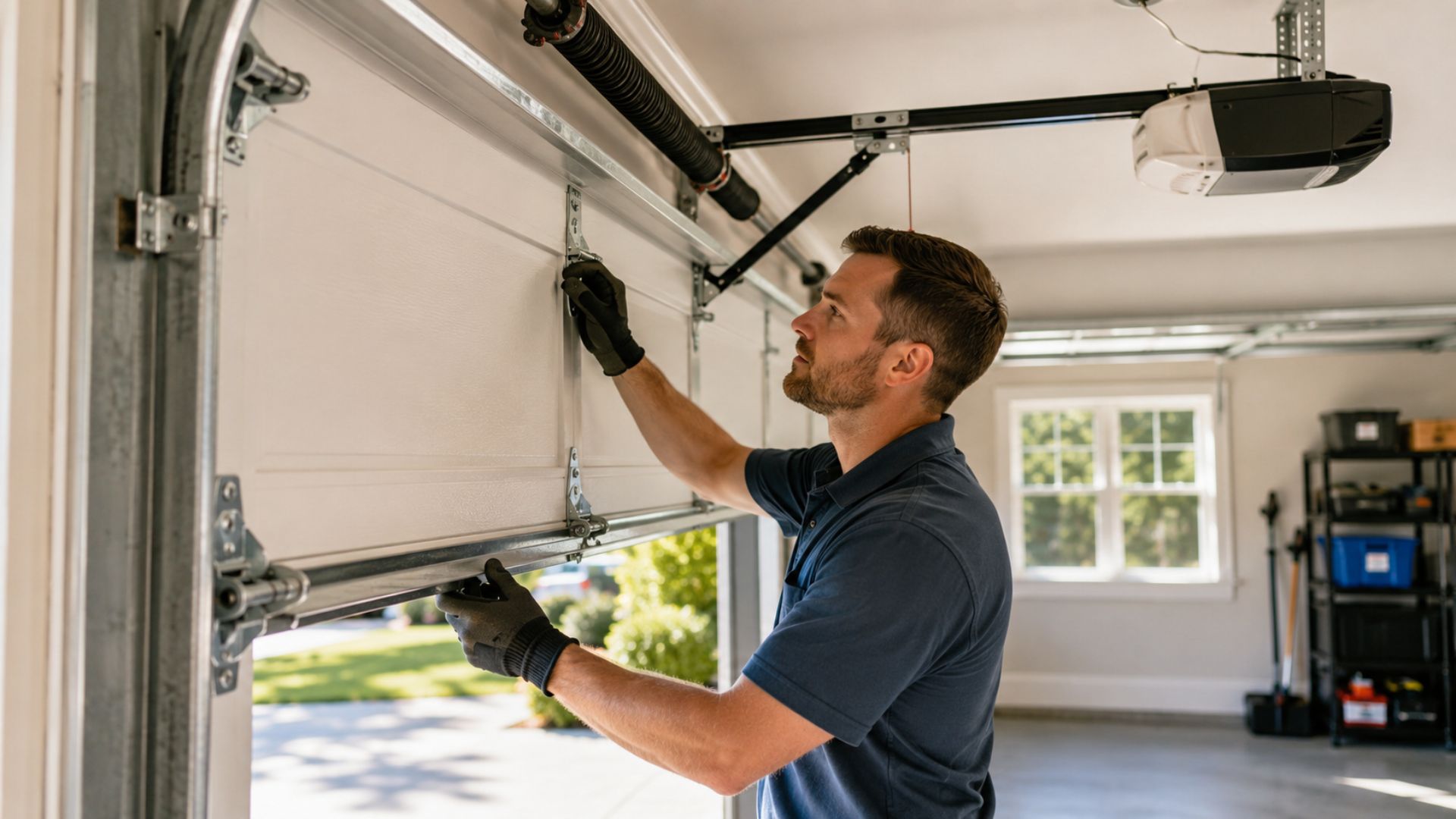
The most important step is keeping the garage door itself in good condition. An opener is designed to lift a properly balanced door—not compensate for worn springs, misaligned tracks, or failing hardware. When the door is out of balance, the opener is forced to work harder than intended, which shortens its lifespan.
Pay attention to how your door moves. Changes in speed, alignment, noise level, or weight are often early warning signs that something is wrong. Addressing these issues early can prevent unnecessary strain on the opener and reduce the risk of a sudden failure.
Routine maintenance and inspections can also catch small problems before they become expensive repairs. Components like rollers, springs, cables, tracks, and mounting hardware naturally wear over time, and keeping them in good condition helps the entire system operate smoothly.
This is especially important in Omaha, where seasonal temperature swings can cause metal components to expand, contract, and wear unevenly. Whether you live in Millard, Elkhorn, Dundee, Benson, West Omaha, or nearby Papillion, regular inspections can help keep your garage door system working reliably year-round.
Opener Maintenance Checklist
Use this checklist to keep the opener, safety system, and moving parts working reliably throughout the year.
| Component / Area | What to Look For | Recommended Action Frequency |
|---|---|---|
| Door Balance | Door stays in place when manually lifted | Annually |
| Springs & Cables | Rust, fraying, or uneven tension | Every 6–12 months |
| Rollers & Tracks | Grinding noise, wobbling, or debris | Every 6 months |
| Hardware (bolts, hinges) | Loose or missing fasteners | Every 6–12 months |
| Opener Operation | Slow response or strain during lifting | Ongoing monitoring |
| Weather Seals | Cracks or gaps letting in air/water | Annually |
FAQs About Garage Door Openers
Will a new garage door opener work with my existing garage door?
Usually, yes, as long as the opener is properly sized for the door and the existing garage door is in safe working condition. A technician should check compatibility before installation.
Can I keep my existing remotes when replacing the opener?
It depends on the brand, model, and age of the remotes. Older remotes may not communicate with a newer opener, while compatible models may be reprogrammed.
Does a new garage door opener increase home value?
An opener alone usually does not create a major increase in property value, but quieter operation, smart access, and updated safety features can make the garage more convenient and appealing to buyers.
What size garage door opener does my home need?
The right opener depends on the door’s size, weight, construction, and overall condition. A heavier or oversized door may require a different setup than a standard residential door.
Can a garage door opener work during an Omaha power outage?
Standard openers require electricity. However, models equipped with battery backup can continue operating for a limited number of cycles during an outage.
Repair or Replace Opener: Use This Final Checklist
Still deciding whether to repair or replace opener systems in your Omaha home? Before spending money on either option, run through this quick checklist.
Choose garage opener repair if:
- Your opener is relatively new.
- This is the first significant problem.
- The issue involves a remote, sensor, programming, or another repairable part.
- The opener still has current safety features.
- The repair cost makes sense compared with replacement.
- The garage door itself remains balanced and operates smoothly.
Consider garage opener replacement if:
- Your opener is older and becoming unreliable.
- You have paid for several repairs recently.
- Major internal components are failing.
- The opener predates current entrapment-protection requirements or lacks essential safety features.
- Replacement offers better value than another major repair.
- You want quieter operation, battery backup, smart controls, or updated security.
If you are still unsure, do not base the decision on the opener’s age alone. A professional inspection can determine whether the opener is actually failing or another garage door component is making it work harder than it should. Titan Garage Doors NE can help you compare both options clearly, so you can move into the next step with confidence.
Get a Free Garage Door Opener Estimate in Omaha, NE
Not sure whether you need garage opener repair or garage opener replacement? Titan Garage Doors NE can inspect your opener and the complete garage door system, explain what we find, and help you compare your options without guessing.
We provide professional garage door opener and garage door repair Omaha services throughout Omaha and nearby communities. Contact Titan Garage Doors NE at (402) 513-0255 for a free estimate and clear recommendations based on the condition of your system. Monthly payment plans are also available for qualifying larger repairs and upgrades.