HAVE ANY QUESTIONS?
  15 YEARS OF EXPERIENCE

A slow garage door has a way of catching you off guard at the worst possible moment. You are ready to head out, coffee in hand, already running a few minutes late, and suddenly the door barely moves. You press the remote again, wondering if it will speed up, but it only creeps along or pauses halfway. What used to open smoothly now feels unpredictable, and that small delay quickly turns into daily frustration.
During Omaha’s hot summer months, this issue becomes even more common. Heat does not just affect the motor. It can change how every part of your garage door system works together, from the tracks and rollers to the springs and lubrication. Often, the heat simply exposes wear that has been building over time.
At Titan Garage Doors NE, we help homeowners throughout Omaha get to the root of garage door slow opening problems. In this guide, you will learn what causes a slow garage door in the summer, what signs to watch for, and when it is time to bring in a professional before the problem gets worse.
Why Does Your Garage Door Move Slower in Hot Weather?
Rising temperatures can affect the materials and lubricants used in a garage door system. Metals expand as their temperature increases, while the viscosity of oil-based lubricants changes with temperature. If the tracks are already misaligned or the rollers and hinges are worn, these changes may make friction or uneven movement more noticeable.
As a result, a door that worked smoothly in cooler weather may begin to slow down during summer. However, heat is often only one contributing factor. Worn rollers, weak springs, poor track alignment, or an aging opener may also be involved, so it is important to inspect the entire system.
Common Reasons You Have a Slow Garage Door
A slow-moving garage door usually comes from friction, worn hardware, an opener issue, or a combination of several small problems. Here are the most common causes we see during the summer repair season:
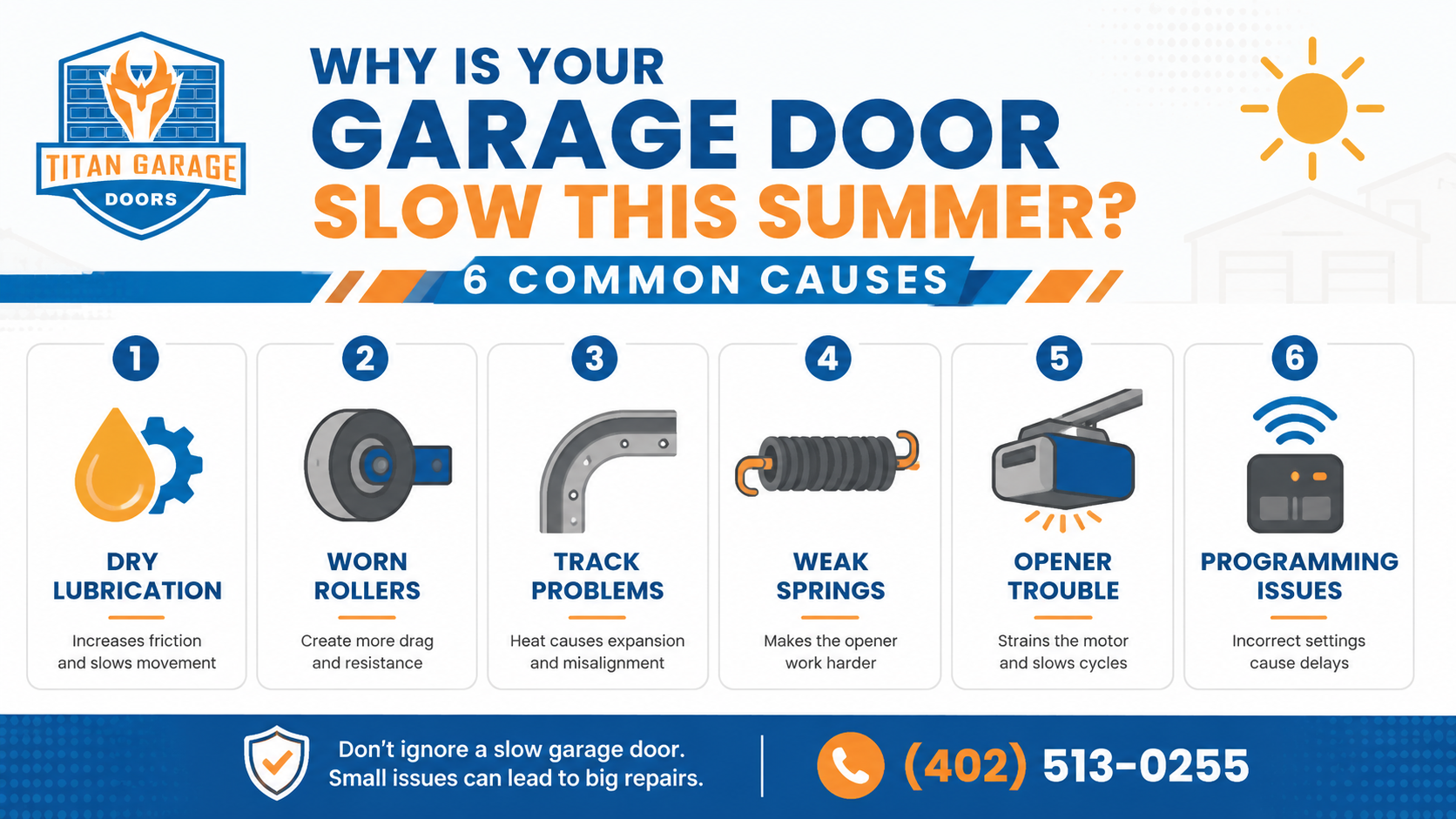
1. Old or Dry Garage Door Lubrication
Garage door parts need proper lubrication to move smoothly. Over time, heat, dust, and regular use can break down the lubricant on rollers, hinges, springs, and bearings. When the moving parts lose that protection, friction increases.
You may hear squeaking, scraping, or grinding as the door opens. The opener may also work harder because the door no longer moves freely. However, do not use just any household oil. Some products attract dust or damage certain materials. A garage door technician can apply the correct lubricant in the correct places.
2. Tracks Expand or Shift in the Heat
Garage door tracks are made of metal. During hot weather, metal can expand slightly. Usually, this change is small. However, if the tracks are already loose, bent, or poorly aligned, summer heat may make the problem more noticeable. The rollers can begin rubbing against the sides of the track, which slows the door and creates extra noise.
You may notice the door hesitating at one point in the opening cycle. You may also see the rollers wobble or hear scraping near the curved part of the track. A certified technician can check the alignment and make safe track repair and adjustments without damaging the system.
3. Worn Garage Rollers
Rollers guide the door through the tracks. When they wear out, crack, rust, or stop turning smoothly, the entire door may slow down. Steel rollers can become noisy when they lose lubrication. Nylon rollers, on the other hand, may chip or develop flat spots after years of use. Either problem increases friction.
Does the door shake while it moves? Do the rollers look uneven inside the track? Those signs may point to worn hardware. Scheduling a same-day garage door roller replacement can improve movement and reduce strain on the opener. It can also help prevent track damage.
4. Weak or Worn Garage Springs
The opener does not lift the full weight of the door by itself. The springs carry much of that load. When the springs weaken, the opener must work harder to raise the door. This can cause slow movement, straining sounds, or a door that stops halfway.
However, never test or adjust garage door springs on your own. They hold a large amount of tension and can cause serious injuries. A professional technician can inspect the springs and confirm whether they still support the door correctly.
5. Garage Door Opener Problems
Sometimes the opener itself causes the slow movement. The motor may be wearing out, or maybe the travel settings may need adjustment. The opener may also have a speed setting that changed after a power issue or control reset.
In other cases, the opener works properly, but it struggles because the door has too much resistance. That is why a technician should inspect both the opener and the door before recommending garage door opener repair. Replacing the motor will not solve the problem if worn rollers or weak springs caused the slowdown.
6. Garage Door Opener Reprogramming Issues
Modern openers rely on programmed travel limits, force settings, remotes, keypads, and smart controls. After a power outage, electrical surge, or control board issue, the opener may lose part of its programming. The door may hesitate, stop early, or move through an unusual cycle.
Garage door opener reprogramming may solve the issue when the hardware remains in good condition. However, incorrect force or travel settings can create safety problems, so homeowners should avoid random adjustments. A trained technician can reset the opener and confirm that the safety features still work correctly.
How Summer Garage Door Maintenance Helps
Regular garage door maintenance can prevent many slow-operation problems. A professional tune-up usually includes a full system inspection, lubrication, hardware checks, opener testing, and safety testing. The technician can also identify parts that are wearing out before they fail.
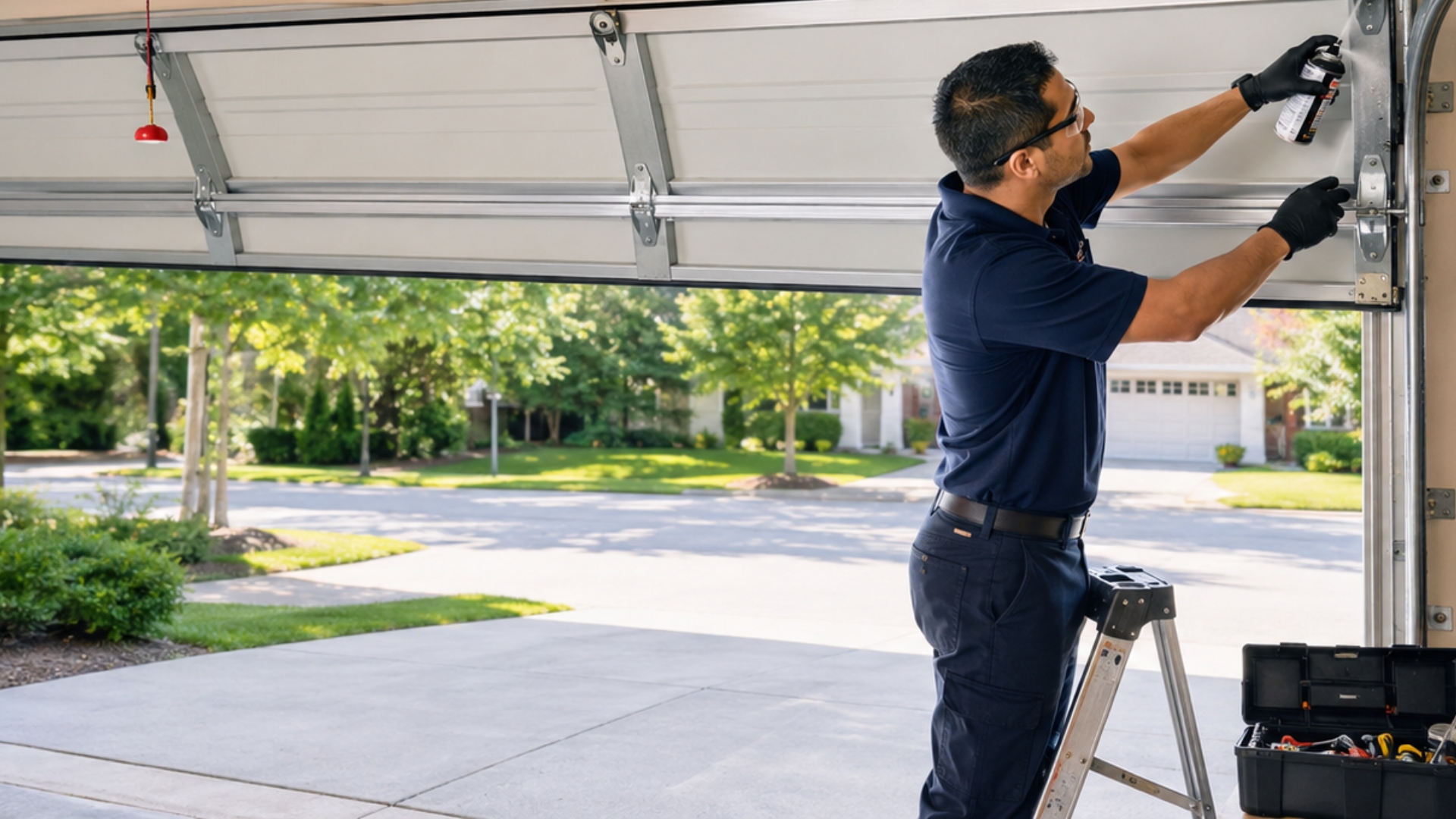
Summer is a practical time to schedule maintenance because homeowners often use the garage more during warm weather. It also gives you time to repair worn parts before Omaha’s colder months arrive.
A simple seasonal checklist may include:
- Inspecting the rollers and hinges
- Lubricating approved moving parts
- Checking track alignment
- Tightening loose hardware
- Testing the opener and remotes
- Cleaning the safety sensors
- Inspecting the springs and cables
- Confirming the door moves evenly
For more ways to protect your system during hot weather, read our complete summer garage door care guide.
What Can You Check Before Calling a Technician?
Before calling a technician, you can safely perform a few basic checks. Use this table to see what you can inspect and which repairs you should avoid handling yourself.
| Safe Homeowner Check | What to Look For | Avoid Doing |
|---|---|---|
| Watch one full door cycle | Shaking, hesitation, or uneven movement | Do not force the door |
| Listen to the system | Grinding, scraping, or straining sounds | Do not remove rollers |
| Check the track area | Dirt, debris, or visible obstructions | Do not loosen track brackets |
| Inspect the safety sensors | Dirt, blocked lenses, or misalignment | Do not bypass the sensors |
| Test the remote | Delayed or inconsistent response | Do not change random opener settings |
| Look at visible hardware | Loose screws or wobbling rollers | Do not touch springs or cables |
If the door feels unusually heavy, stops halfway, or makes loud grinding sounds, stop using it and schedule professional garage door repair in Omaha.
When Should You Schedule Garage Door Repair in Omaha?
A small delay may not seem urgent, but certain warning signs require professional attention. Schedule garage door repair in Omaha if:
- The door moves much slower than before
- The opener strains or hums
- The door stops halfway
- The rollers grind or wobble
- The door shakes during movement
- The remote works inconsistently
- The door opens unevenly
- The system produces new or loud noises
Local weather can make worn parts more noticeable. Homes in Millard, Elkhorn, Benson, Dundee, Papillion, and West Omaha may experience the same summer heat, but each garage door ages differently based on use, door weight, and maintenance history.
An experienced technician can inspect the full system and explain whether you need a simple adjustment, opener repair, roller replacement, or another garage door maintenance service.
FAQs: Slow Garage Doors
Why does my garage door open partway and then stop?
This can happen when the opener senses too much resistance or when the travel limits are not set correctly. It may also point to worn rollers, track issues, or a problem with the safety system.
What are signs that my garage door rollers need replacement?
Look for rollers that wobble, make grinding noises, or appear cracked or worn. You may also notice the door shaking or moving unevenly during operation.
How do I know if my garage door tracks are misaligned?
Misaligned tracks can cause scraping sounds, uneven movement, or visible gaps between the rollers and the track. The door may also hesitate at certain points while opening or closing.
Why does my garage door make loud noises when opening?
Loud noises often come from dry or worn parts such as rollers, hinges, or springs. Grinding or scraping sounds may also indicate track or alignment issues.
What should I do if my garage door remote stops working?
Start by checking the batteries and making sure nothing is blocking the signal. If the problem continues, the opener may need reprogramming or further inspection.
Book Your Opener Maintenance Appointment in Omaha Today
If your garage door opens slowly, shakes, or struggles in the summer heat, Titan Garage Doors NE is ready to help. Our experienced team handles everything from routine maintenance and opener repairs to roller replacement and full garage door repairs throughout Omaha and surrounding areas.
Don’t wait for the problem to get worse—contact Titan Garage Doors NE today at (402) 513-0255 to schedule your free estimate. Flexible monthly payment plans are available for larger repairs and garage door upgrades.