HAVE ANY QUESTIONS?
  15 YEARS OF EXPERIENCE

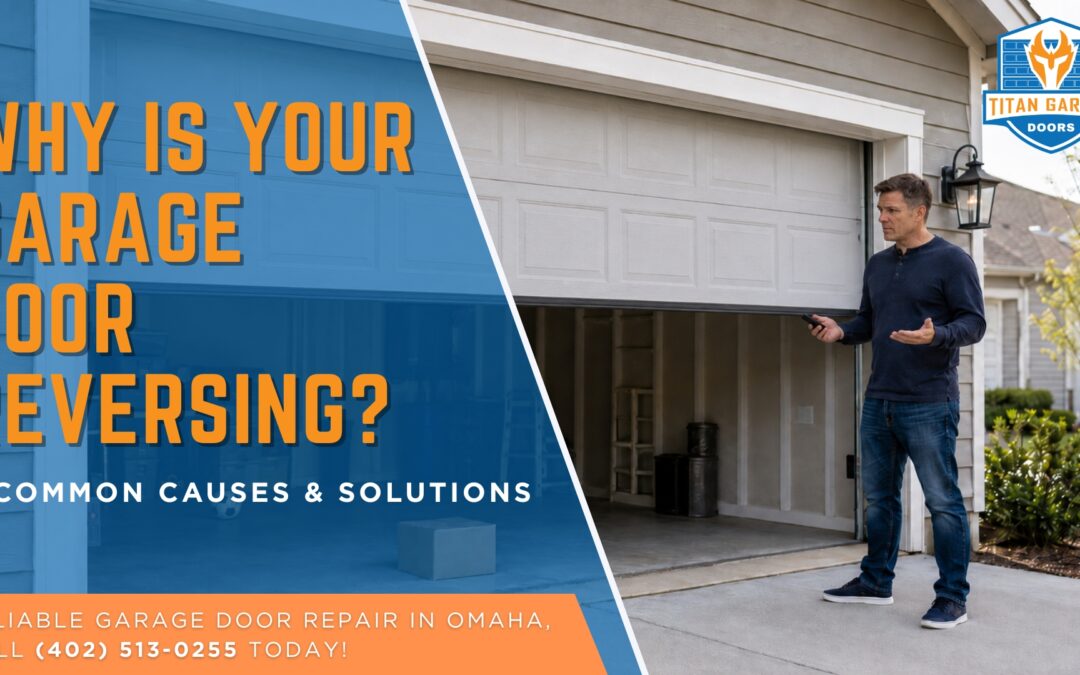
You press the remote, watch the garage door start closing, and then it suddenly heads right back up. You try again. The same thing happens. If your garage door reverses down during the closing cycle, the opener may be reacting to a safety issue, resistance, or an incorrect setting.
Sometimes the fix is as simple as cleaning a dirty sensor. Other times, worn hardware or a problem with the opener needs professional attention. Either way, repeated reversing is something you should investigate rather than ignore.
At Titan Garage Doors NE, we troubleshoot garage door problems throughout Omaha and nearby communities. Below, we explain five common reasons a garage door reverses, what you can safely check yourself, and when it is time to schedule professional service.
How the Garage Door Reversing Safety System Works
Before looking at the causes, it helps to understand why your garage door reverses in the first place.
Modern garage door openers include safety features designed to prevent the door from closing when something blocks its path. Photo-eye sensors near the bottom of the tracks send a beam across the garage opening. If a person, pet, bicycle, box, or another object interrupts the beam, the opener should reverse the closing door. These safety features are required by law for residential garage door openers.
The opener also monitors resistance while the door moves. If the system encounters more resistance than expected, it may stop or reverse. That response can protect your family and property. However, when the door reverses even though nothing stands underneath it, one of the following problems may be responsible.
5 Reasons Your Garage Door Reverses Down
Your garage door can reverse for several reasons, and the problem does not always come from the opener itself. The most common causes involve the safety sensors, tracks, rollers, opener settings, or the balance of the door.
Understanding the cause first makes troubleshooting much easier. Here are the five problems homeowners should check most often.
1. Blocked or Dirty Garage Sensors
Garage door sensors sit only a few inches above the floor, so they collect dust, dirt, cobwebs, and debris easily. Storage bins, children’s toys, bicycles, lawn equipment, or even a trash can can also block the sensor beam.
When that happens, the opener may interpret the blockage as an object underneath the door and reverse it. You may notice that the door starts closing and immediately goes back up. In some cases, one of the sensor indicator lights may also blink or turn off.
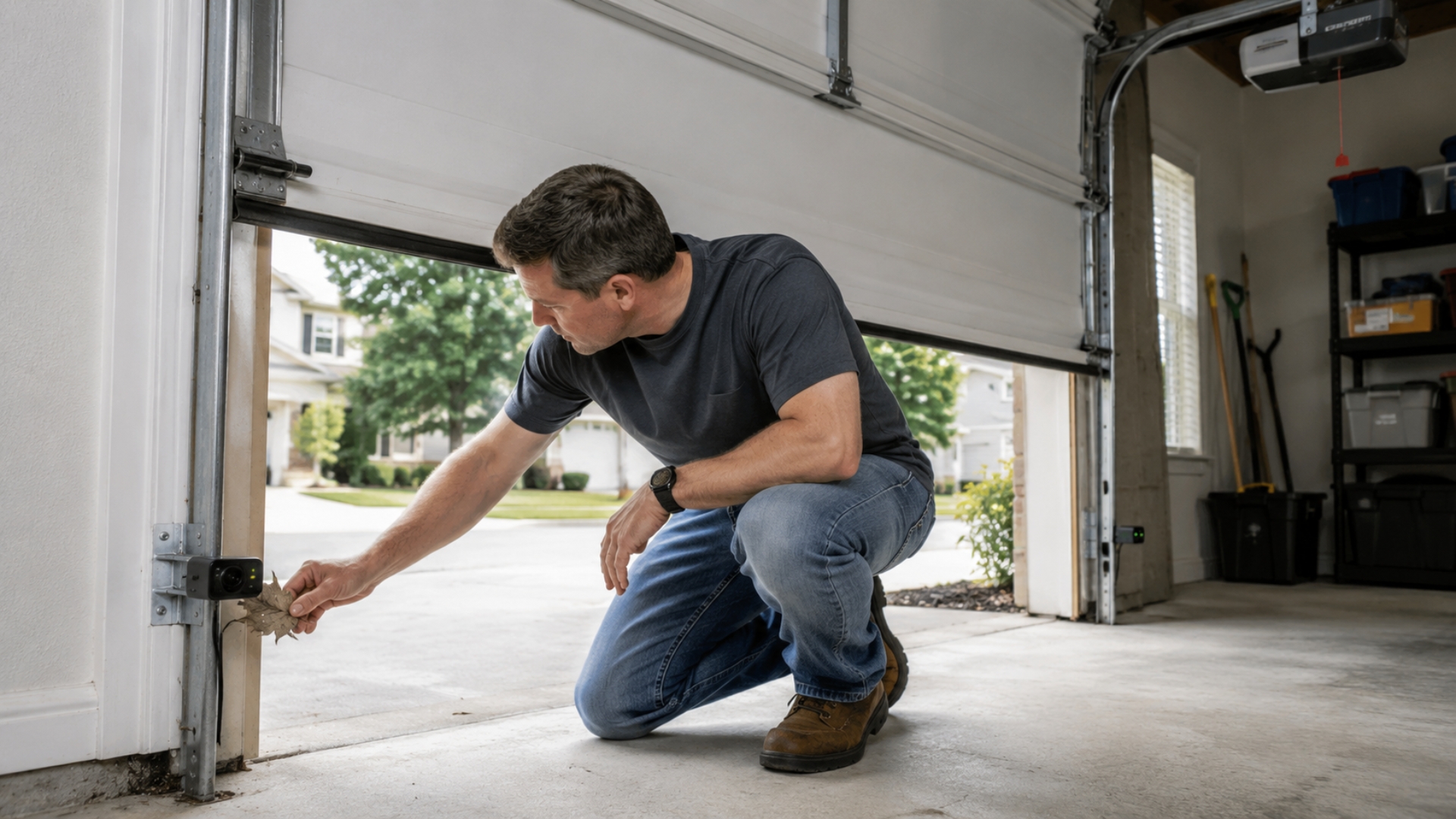
This is one of the most common causes of garage door reversing, especially in busy garages where storage items sit close to the tracks.
2. Misaligned or Failing Safety Sensors
Clean sensors still need to point toward each other correctly. A sensor can shift when someone bumps it with a bicycle, lawn mower, storage box, or another object. Loose brackets and vibration from regular garage door use can also affect alignment over time.
If the sensors cannot maintain a clear connection, the opener may treat that signal loss as a safety concern and reverse the door. You may notice:
- One sensor light blinking
- One indicator light staying off
- The door reversing with nothing underneath it
- The door closing only when you hold the wall control
- Sensor problems returning after adjustment
If the sensors continue losing alignment or stop responding, garage door sensor replacement may be necessary.
3. Garage Track or Roller Resistance
Sensors are not the only reason a garage door reverses. The opener also needs the door to move smoothly through the tracks. If a roller binds, a track bends, or debris interferes with movement, the opener may detect unusual resistance.
The door may start closing normally, reach the problem area, and then reverse. Worn rollers, damaged hinges, track debris, or loose hardware can all create enough resistance to interrupt the closing cycle.
Pay attention to where the door reverses. If it stops at the same point every time or makes scraping and grinding sounds first, track or roller resistance may be the cause.
4. Incorrect Garage Opener Settings
Your garage door opener uses travel and force settings to control how far the door moves and how it reacts to resistance. If those settings become incorrect, the opener may think the door reached the floor before it actually did. In other cases, the door may touch the floor and immediately reverse because the opener interprets the contact as too much resistance. This can happen after opener adjustments, programming changes, repairs, or changes to the garage door itself.
Incorrect settings do not always mean the opener needs replacement. A technician may be able to correct the settings through garage opener repair if the opener and door remain in good condition.
5. An Unbalanced Door or Worn Hardware
Sometimes the opener and sensors work correctly, but the garage door itself does not. Springs help support the weight of the door. Rollers guide it through the tracks, while cables and hinges help the system move evenly. When these parts wear or fail, the door can become harder to move. An unbalanced garage door may feel heavy, hang unevenly, shake, or move differently from one side to the other. The opener may then detect too much resistance and reverse the door.
Homeowners sometimes consider garage opener replacement when this happens. However, installing a new opener will not correct weak springs, damaged rollers, cable problems, or an unbalanced door. If you are unsure whether your system needs repair or a full replacement, read our guide on when to repair or replace your garage door opener before making that decision.
What to Do When Your Garage Door Keeps Reversing
Once you understand the likely causes, start with the safest and simplest checks. You do not need to take the system apart or adjust high-tension components.
Follow this order:
- Clear the doorway. Remove boxes, bicycles, tools, trash cans, or other objects near the sensors and tracks.
- Clean the sensor lenses. Use a soft, dry cloth and check whether both indicator lights remain steady.
- Watch one closing cycle. Look for shaking, scraping, hesitation, or a point where the door consistently reverses.
- Check the track area. Remove loose debris, but do not loosen brackets or try to bend the tracks.
- Check the opener manual. If the door reaches the floor and reverses, review the manufacturer’s guidance for travel settings.
- Stop if the door feels heavy or hangs unevenly. These symptoms may involve springs, cables, rollers, or door balance.
If cleaning the sensors and clearing the doorway do not solve the problem, avoid repeatedly forcing the door closed. A technician should inspect the sensors, opener settings, tracks, rollers, and lifting system to find the actual cause. Contact Titan Garage Doors NE to book a free consultation on your garage door problem.
When a Reversing Door Needs Professional Repair
After you clear the doorway, clean the sensors, and check for obvious track or opener issues, the next step is knowing when to stop. Some garage door reversing problems are safe to check at home, while others can point to damaged springs, cables, rollers, or an unbalanced door.
Use the guide below to separate simple homeowner checks from warning signs that need professional garage door repair Omaha.
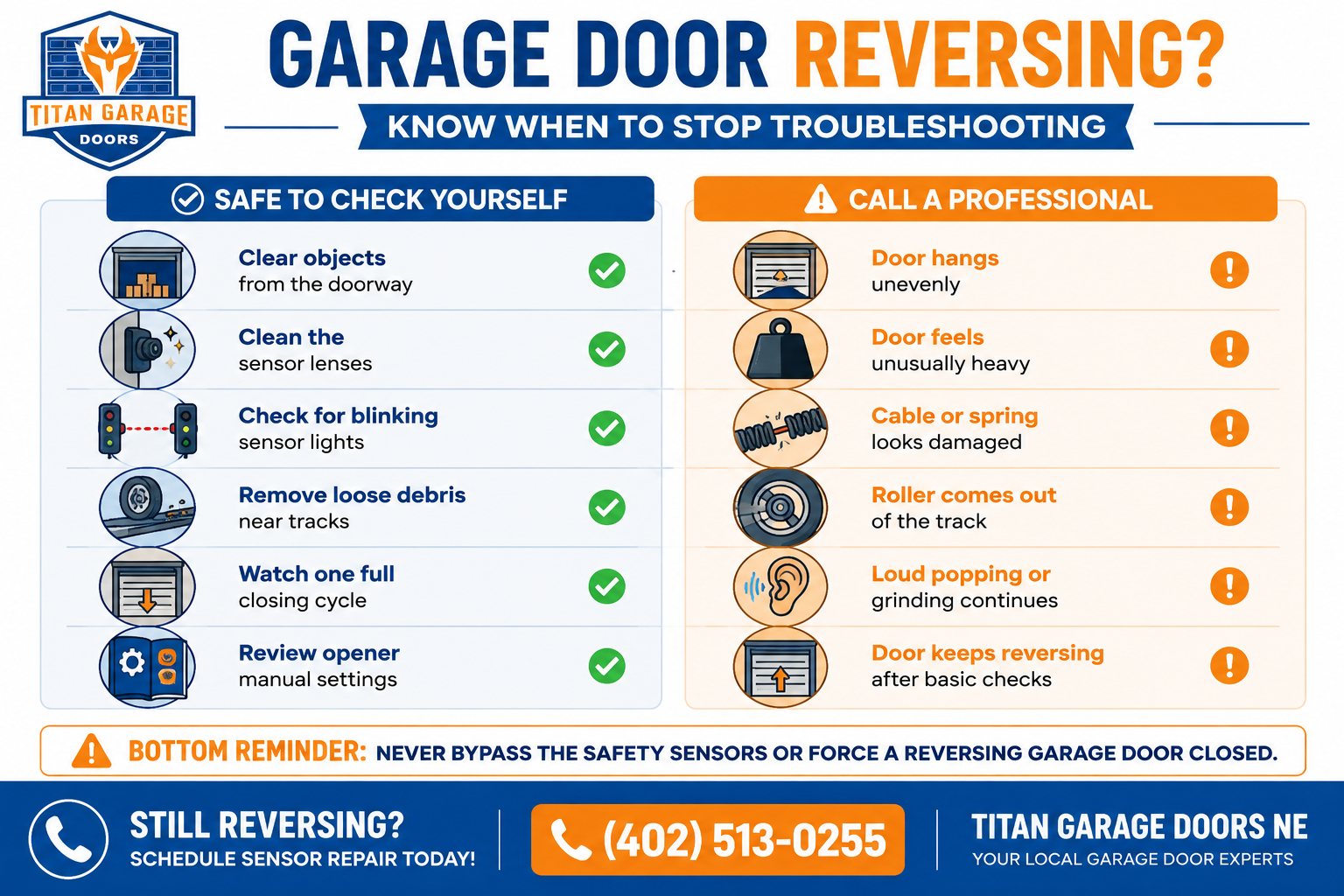
If your garage door still reverses after the basic checks, or you notice an uneven door, unusual weight, damaged hardware, or loud grinding and popping sounds, stop using the system. A professional inspection can help identify the actual cause without bypassing the safety features or creating more damage.
FAQs About a Garage Door That Reverses While Closing
Can bright sunlight interfere with garage door sensors?
Yes. Strong sunlight can sometimes interfere with certain photo-eye sensors when it shines directly into a sensor lens. A technician can confirm whether sunlight or another sensor problem causes the issue.
Can insects cause garage door sensor problems?
Yes. Cobwebs, insects, and debris can collect around sensor lenses and brackets. Keeping the area clean can help the sensors maintain a clear beam.
Why does my garage door reverse only occasionally?
An intermittent problem may come from a loose sensor connection, vibration, developing track resistance, or another issue that does not occur during every cycle. Recurring problems deserve an inspection.
Do both garage door sensors need replacement if one fails?
Not always, but compatibility matters when replacing only one garage door sensor. A technician can test both sensors and determine whether one component or the sensor pair should be replaced.
Can a power outage cause garage door reversing problems?
A power outage in Omaha can affect some opener settings or controls, depending on the system. If reversing begins immediately after a power interruption, check the owner’s manual or have the opener tested.
Restore Safe and Reliable Garage Door Operation
A reversing garage door can start with something as simple as a blocked sensor, but the important thing is getting to the actual cause instead of repeatedly resetting or forcing the door. Addressing the problem early can help prevent additional wear, protect the door system, and restore dependable operation.
Once the basic checks have been ruled out, the next step is finding out exactly what is keeping the door from closing properly.
Need Help With a Garage Door That Keeps Reversing?
If your garage door still reverses, stops before reaching the floor, or refuses to stay closed, Titan Garage Doors NE can diagnose the problem for you. Our certified technicians inspect the sensors, opener, tracks, rollers, springs, cables, and related components to pinpoint what is causing the issue.
Whether you need garage door sensor repair, opener repair, or garage door maintenance, we’ll explain what we find and recommend the repair that fits the problem.
Call Titan Garage Doors NE at (402) 513-0255 to schedule your garage door inspection and get your door operating reliably again.